Far Meadow Safaris, small-group wildlife photo safaris in the American West and Alaska
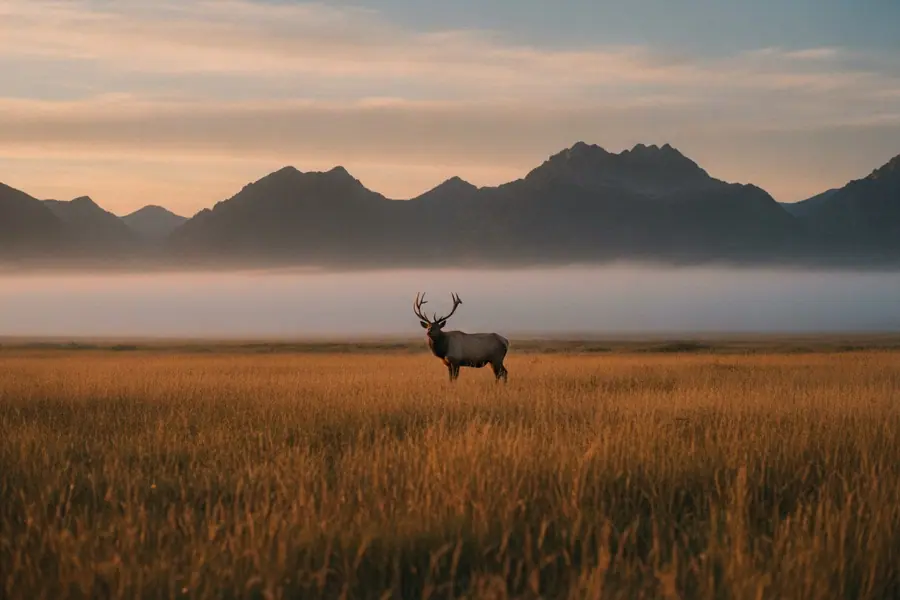
Long lens. Longer patience. Next safari: Elk rut, Colorado · Sep 18–21 · 3 of 6 spots · $2,950 Reserve
Six photographers at mostGuiding since 2010Permitted in five national parksLoaner 500mm lenses★ 4.9 · 212 reviews
Small-group wildlife safaris · the American West and Alaska
We wait, so the animal never has to notice us.
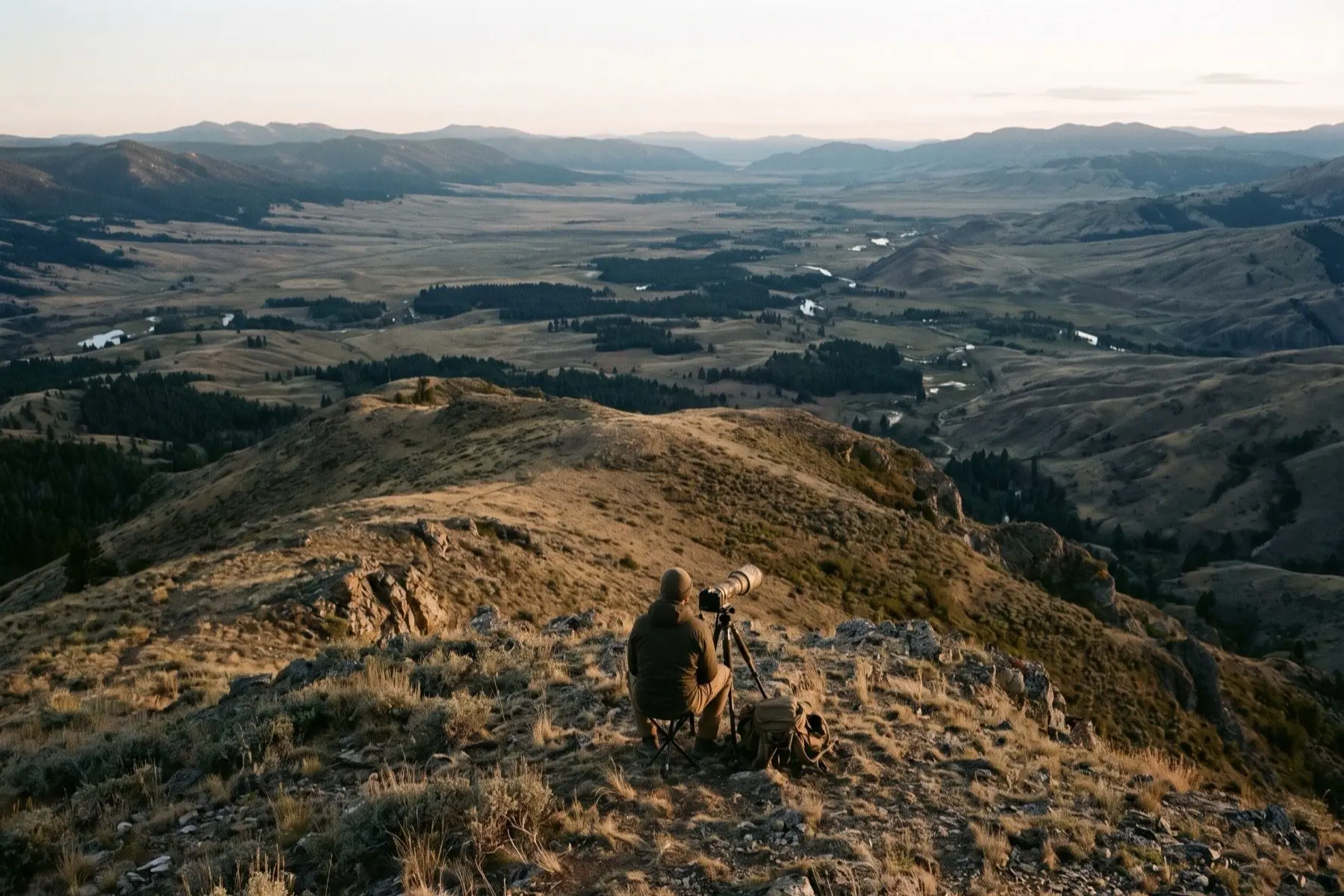
Six photographers, one van with a window for each of you, and a guide who has spent sixteen autumns learning which meadow the bulls cross at sunrise. Every frame on this page says how far away it was made and how long we waited for it.
2027 safaris
Six safaris, six seasons
Dates are set by the animals, not the calendar. Each one runs once a year.
-
 Next safari
01
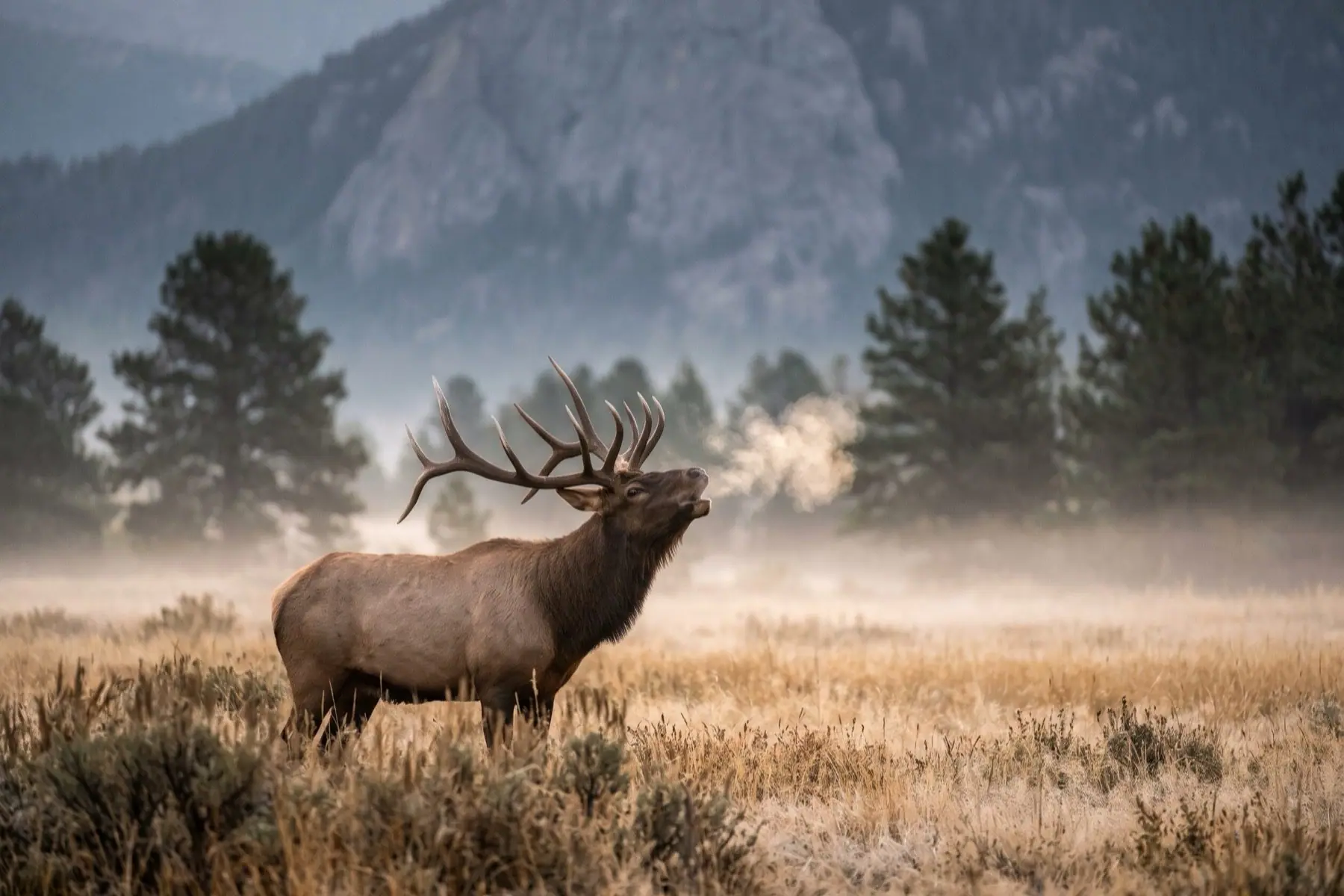
Elk rut
Rocky Mountain National Park, Colorado
Bulls bugling in the fog at Moraine Park and Horseshoe Park, two shoots a day at first and last light, and the long middle of the day for editing. Lodging in Estes Park, the van, park fees, breakfasts and lunches.
- Dates
- Sep 18–21, 2027 · Sat to Tue
- Length
- 4 days
- Group
- 6 photographers
$2,9503 of 6 spots · $500 holds yoursReserve
-
02
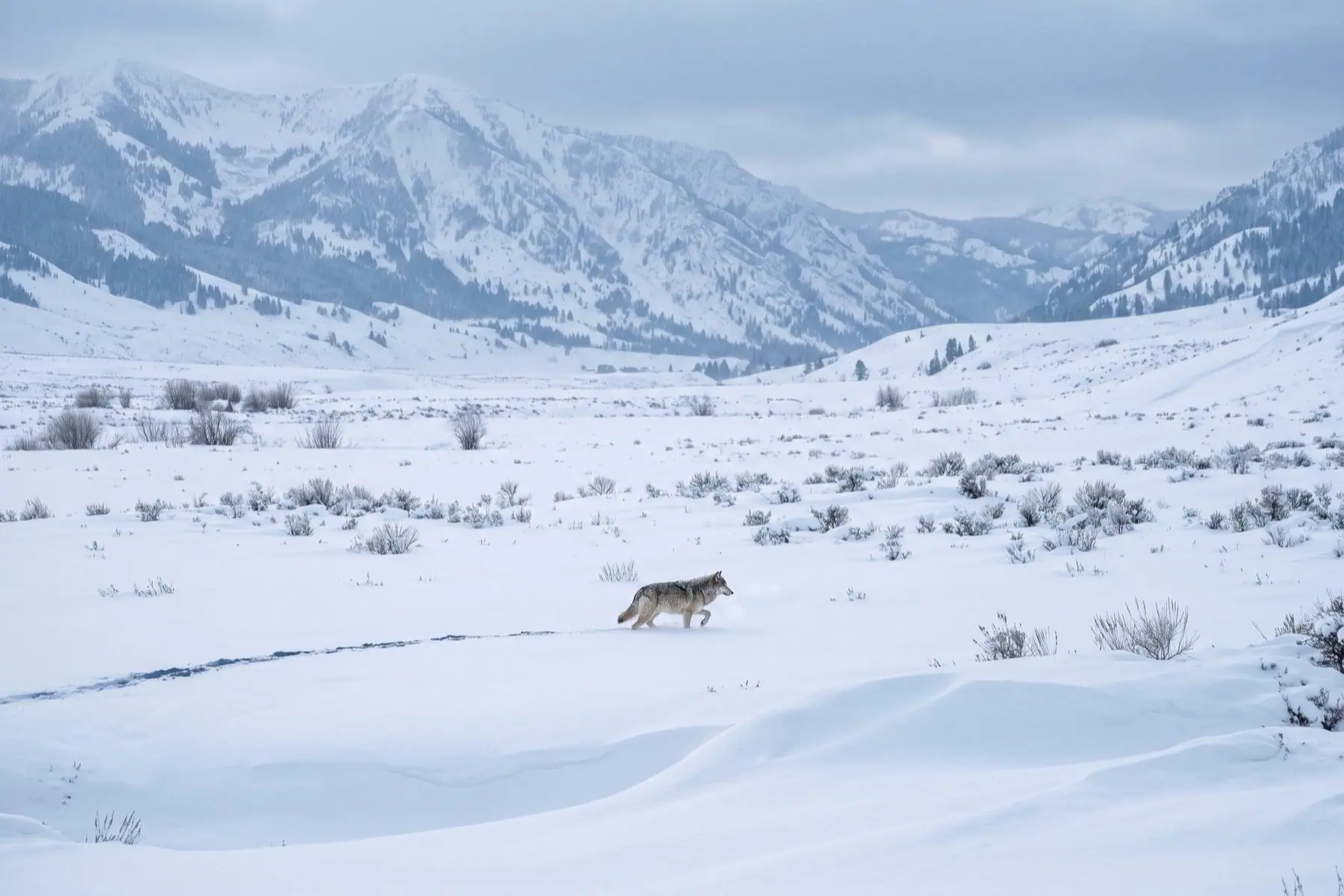
Wolves in winter
Lamar Valley, Yellowstone
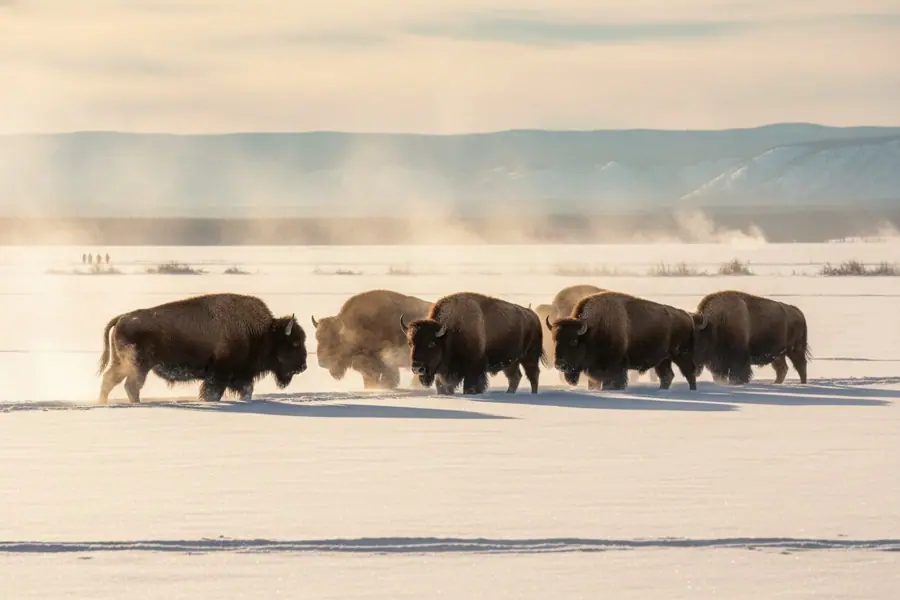
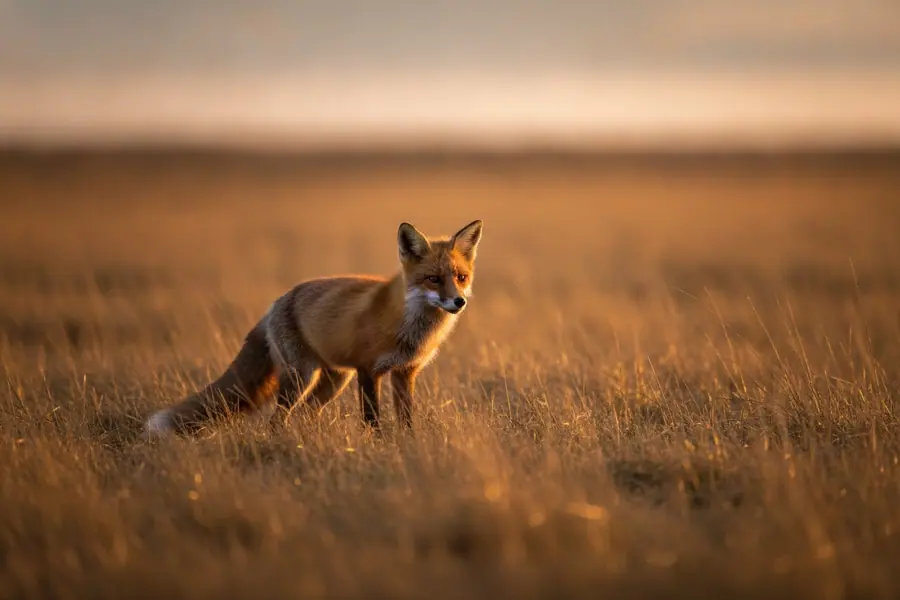
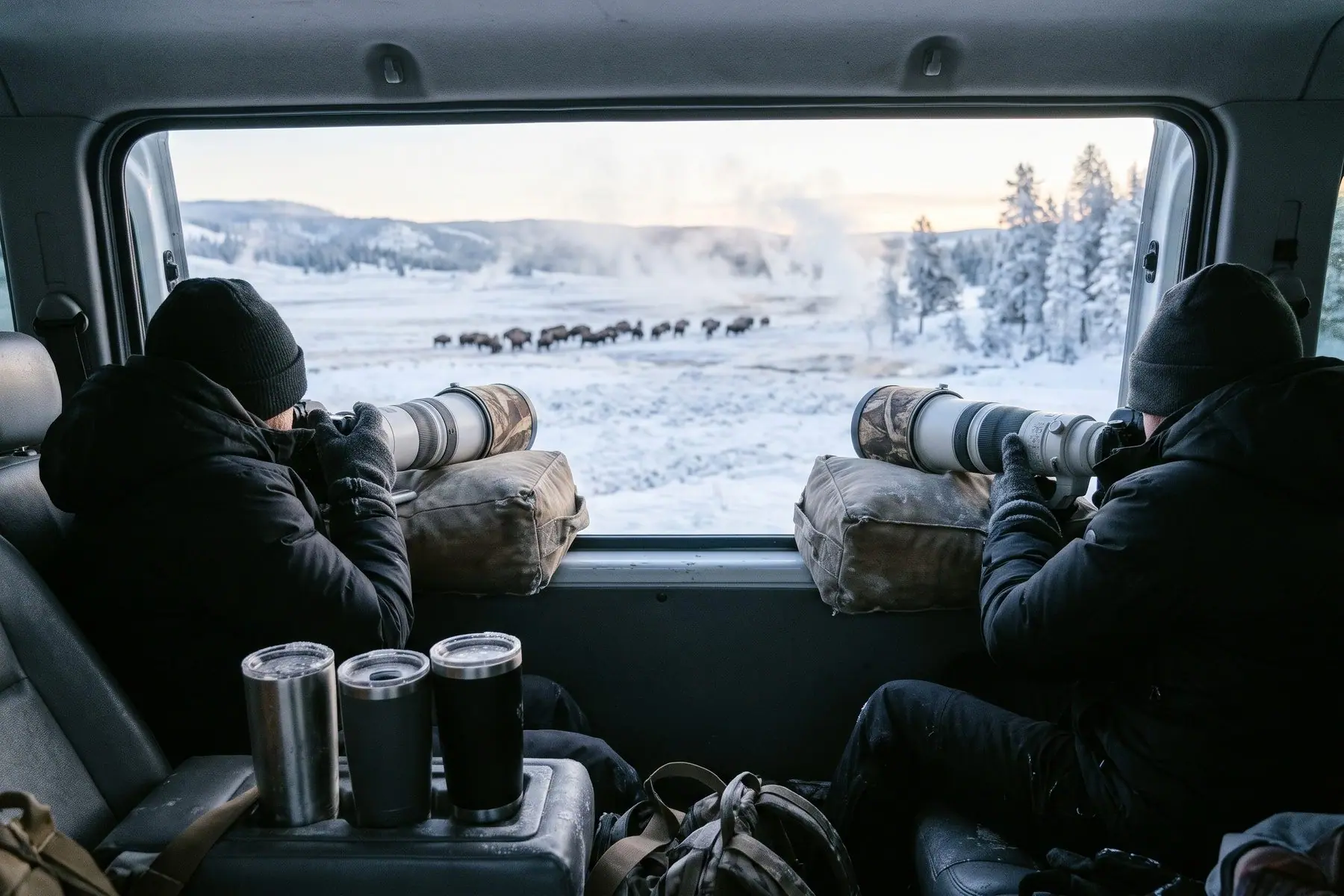
The one road in Yellowstone open all winter, Gardiner to Cooke City, driven before dawn with a spotting scope on every pullout. Wolves at a distance, bison in frost, foxes hunting under the snow.
- Dates
- Feb 10–14, 2027 · Wed to Sun
- Length
- 5 days
- Group
- 6 photographers
$3,4002 of 6 spots · $500 holds yoursReserve
-
03
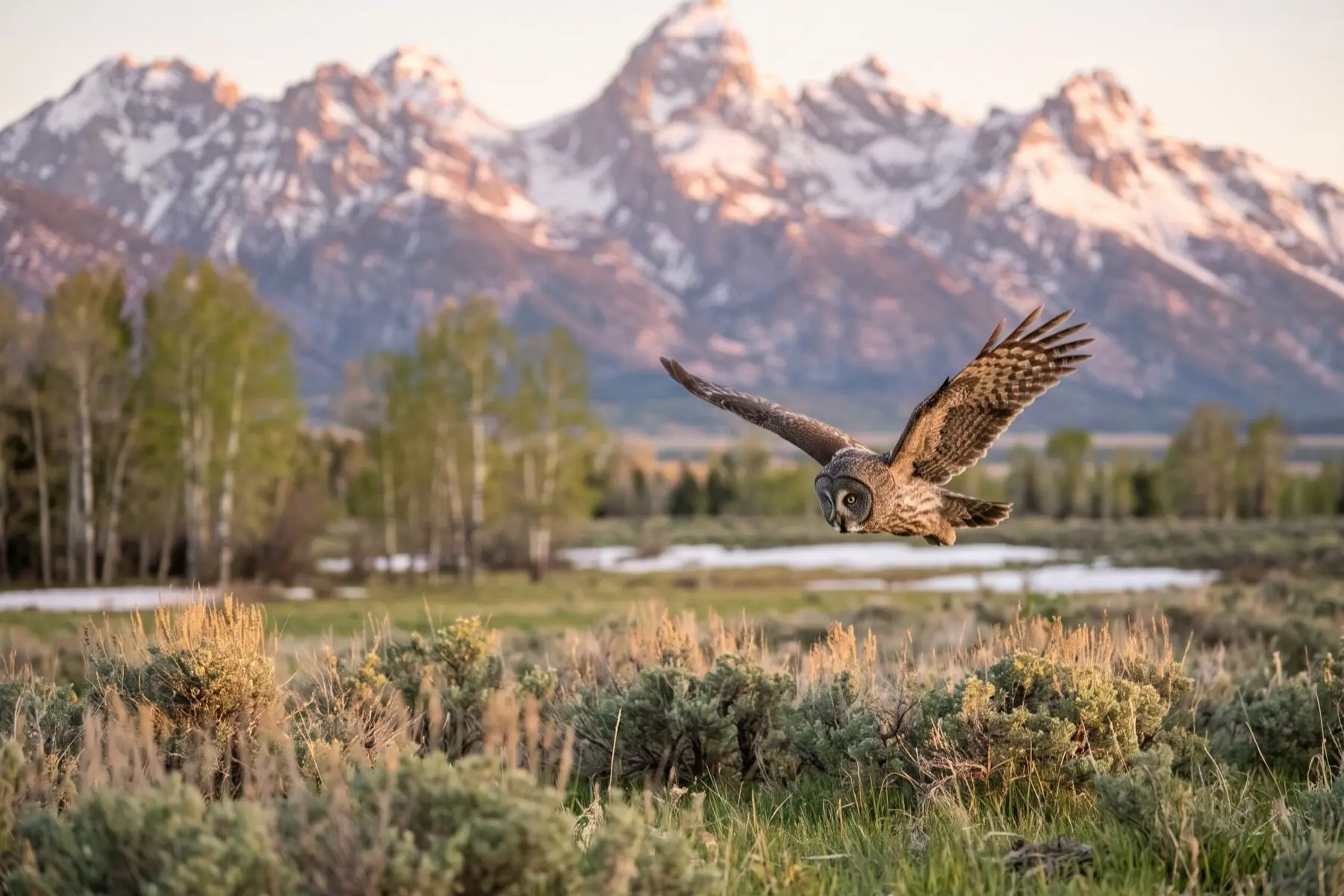
Owls and new calves
Grand Teton, Wyoming
Great gray owls hunting the meadow edges at dusk, red bison calves in the sage, and the Tetons still white. Never baited, never called. Lodging in Jackson.
- Dates
- May 27–30, 2027 · Thu to Sun
- Length
- 4 days
- Group
- 6 photographers
$2,8005 of 6 spots · $500 holds yoursReserve
-
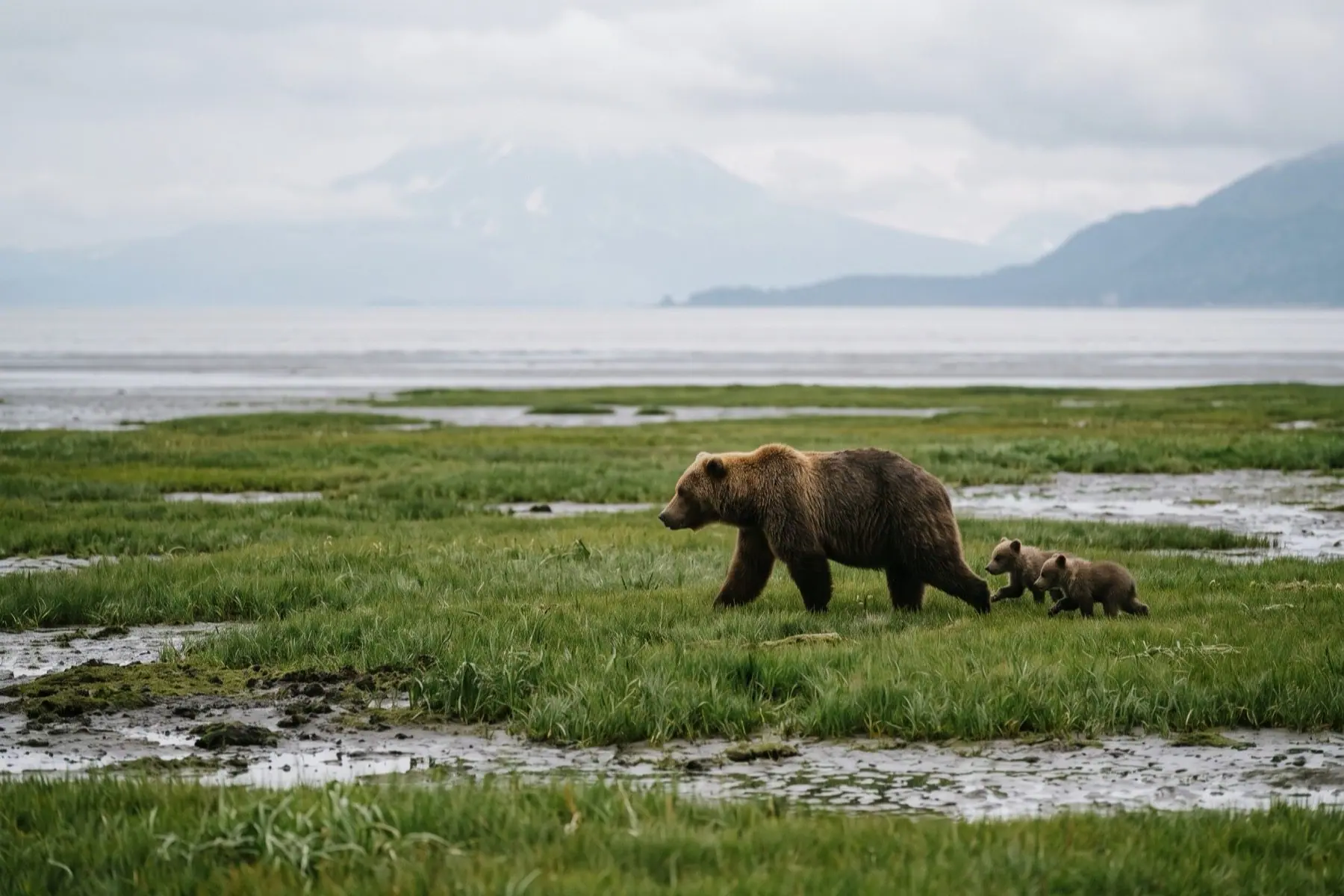
04
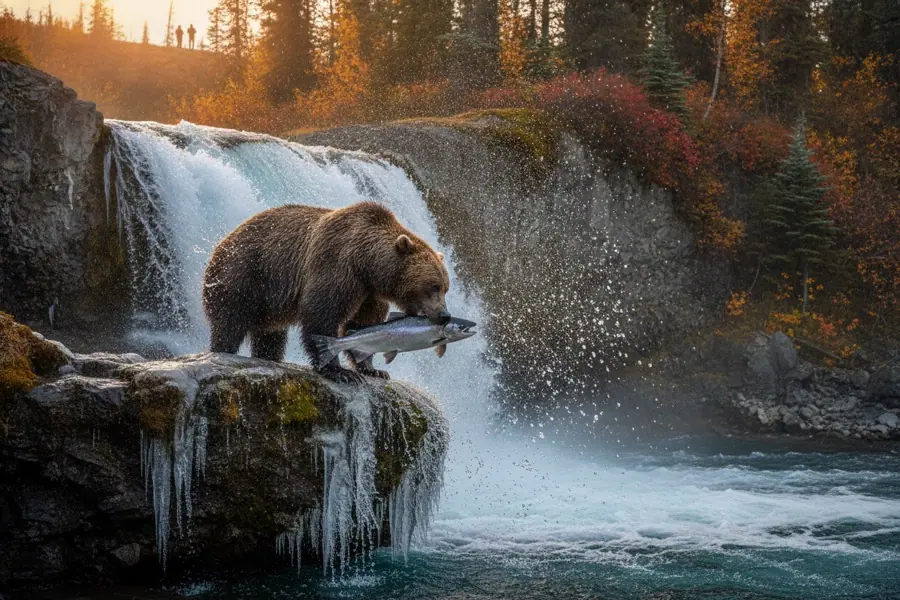
Brown bears of the coast
Lake Clark, Alaska
Sows and cubs grazing the sedge flats at low tide, and males digging clams. We stand together as one group and let the bears choose the distance. A small family-run lodge on the coast, every meal and the flights.
- Dates
- Jul 8–11, 2027 · Thu to Sun
- Length
- 4 days, floatplane from Homer
- Group
- 4 photographers
$5,4001 of 4 spots · $1,000 holds yoursReserve
-
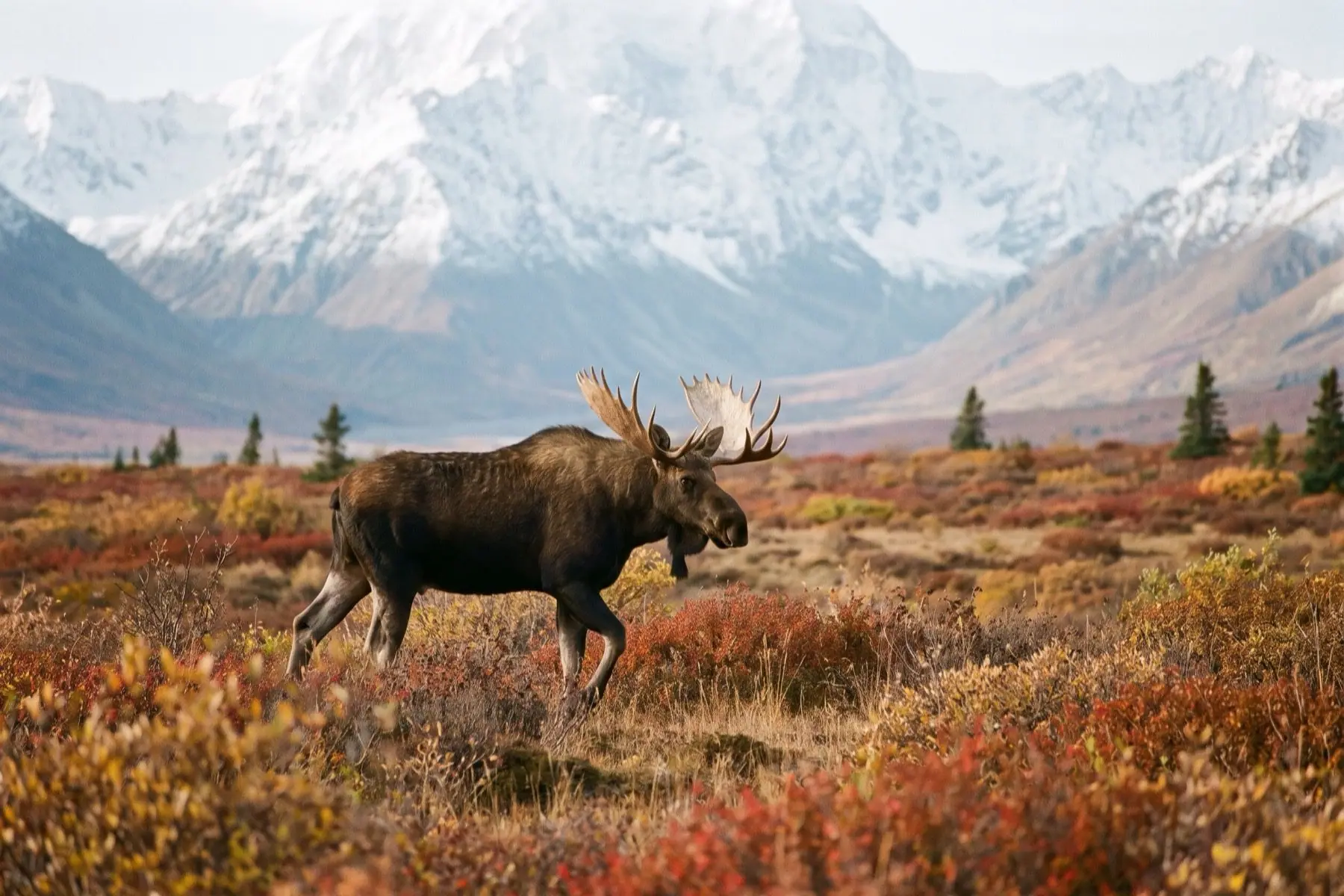
05
Moose and red tundra
Denali, Alaska
The moose rut in the first fifteen miles of the park road and the hills outside it, with the tundra gone red and the range under fresh snow. Lodging near the park entrance.
- Dates
- Sep 3–7, 2027 · Fri to Tue
- Length
- 5 days
- Group
- 6 photographers
$4,2004 of 6 spots · $500 holds yoursReserve
-
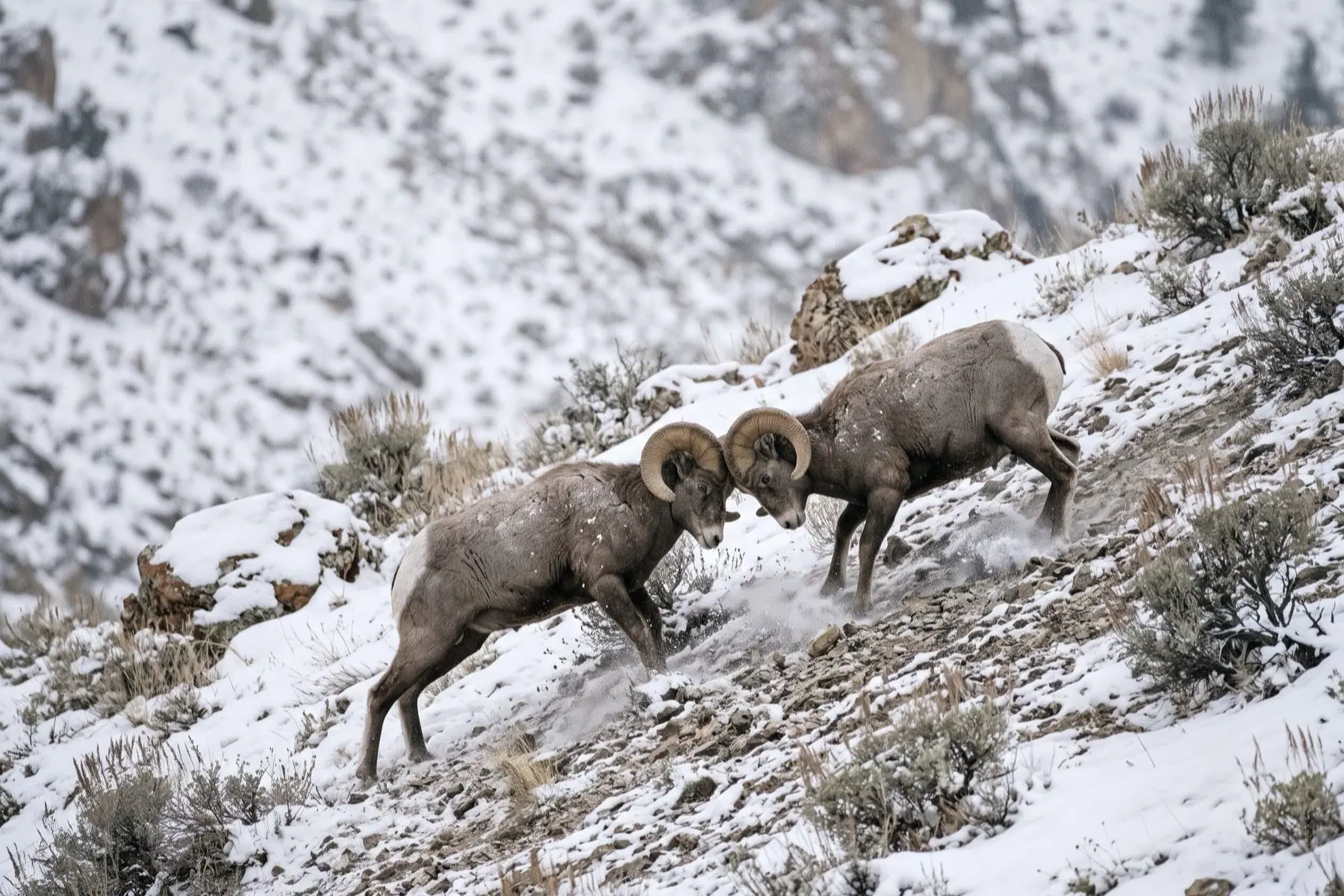
06
Bighorn rams
Gardiner, Montana and Yellowstone’s north edge
Late-November rut on the cliffs above the Yellowstone River: rams squaring off, then the crack you hear before you see it. Fast shutter, cold fingers, warm van.
- Dates
- Nov 29–Dec 2, 2027 · Mon to Thu
- Length
- 4 days
- Group
- 6 photographers
$2,6006 of 6 spots · $500 holds yoursReserve
The season
Who is where, month by month
Nine animals, the twelve months they keep, and the weeks we go. It is November now: the bighorn rams are about to start.
| Species | J | F | M | A | M | J | J | A | S | O | N | D |
|---|---|---|---|---|---|---|---|---|---|---|---|---|
| ElkColorado | Good | Good | – | – | – | Good | – | Good | Sep 18 | Best | Good | Good |
| Gray wolfYellowstone | Best | Feb 10 | Best | Good | – | – | – | – | – | Good | Good | Good |
| BisonWyoming | Good | Feb 10 | Good | Good | May 27 | Good | Good | Best | Good | Good | Good | Good |
| Great gray owlGrand Teton | – | – | – | Good | May 27 | Good | – | – | – | – | – | – |
| Brown bearAlaska coast | – | – | – | – | Good | Best | Jul 8 | Best | Good | – | – | – |
| MooseDenali | – | – | – | – | – | Good | – | Good | Sep 3 | Good | – | – |
| Bighorn sheepMontana | Good | – | – | – | – | – | – | – | – | – | Nov 29 | Best |
| Red foxMontana | Best | Feb 10 | Good | – | – | – | – | – | – | – | Good | Good |
| Bald eagleHaines, Alaska | – | – | – | – | – | – | – | – | – | Good | Best | Good |
Best weeksGoodOur safari startsNow
Day two of the elk rut · Sun Sep 19, 2027 · Mountain Time
A day, drawn by its waits
Every gap on this line is as long as the wait it stands for. Scroll it slowly. That is roughly how it feels on the pullout, and why the frame at 6:51 is worth it.
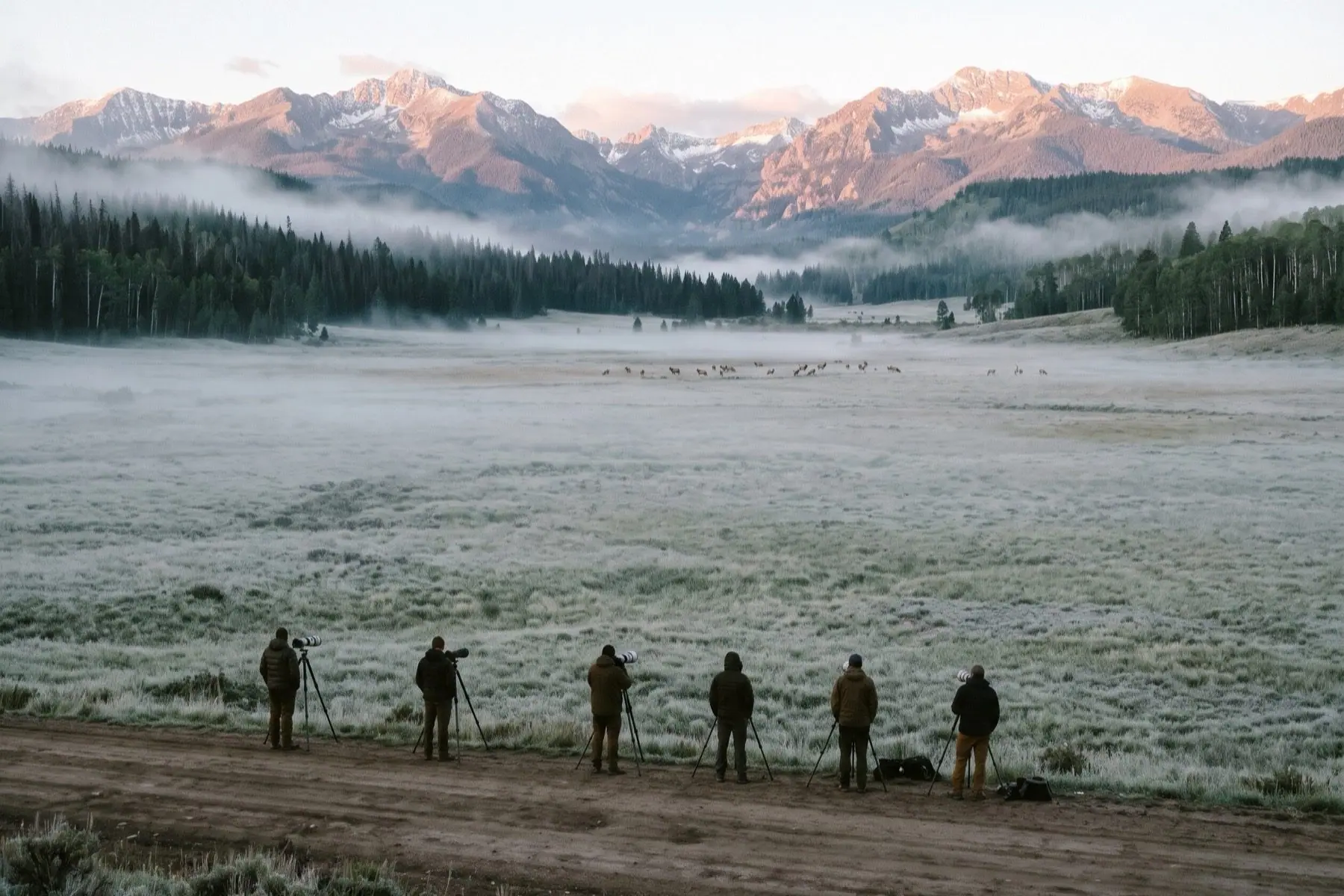
- Out of Estes Park25 min
Coffee in the van, headlights off at the park gate. Nobody talks much.
- The pullout above Moraine Park47 min
Tripods up by feel. The first bugle comes out of the dark from the far side of the meadow, then another answers it.
- First light29 min
Gray fog, the herd a smudge. ISO 6400 and a slow shutter; Wade checks every screen once.
- Sunrise, and the bull walks out1 hr 39 min
He crosses into the backlit fog and stops to bugle, breath steaming. Everyone has the frame. This is the 47 minutes paying off.
- The herd beds down in the pines1 hr 30 min
We let them go. Breakfast in town.
- Editing at the long table3 hrs 15 min
Your best three frames on the big screen, one at a time. Highlights, crop, what to change tonight.
- Rest3 hrs
Nap, walk the river, or nothing. The elk are doing the same.
- Back out, Horseshoe Park2 hrs 25 min
Bulls start moving again in the late light. From 5 PM the rut meadows close to off-trail walking, so we shoot from the road edge like everyone should.
- Last light22 min
Two young bulls sparring at the edge of the trees, rim-lit. 1/1000 at ISO 3200.
- Sunset
Lens caps on. Dinner in town at 7:45.
Portfolio
Distance, and the wait
Frames from the last three seasons, by Wade and by guests, each with its lens, its distance and how long it took.
-
Bull elkMoraine Park, Colorado · September
600mm · f/4 · 1/500 · ISO 1600
180 ydWaited 47 min
-
Gray wolfLamar Valley, Yellowstone · February
600mm + 1.4× · f/5.6 · 1/1600 · ISO 640
About 600 ydWaited two mornings
-
Brown bear and cubsLake Clark coast, Alaska · July
400mm · f/5.6 · 1/1000 · ISO 800
110 ydWaited 3 hrs on the flats
-
Great gray owlGrand Teton, Wyoming · May
500mm · f/4 · 1/3200 · ISO 2500
60 ydWaited four evenings
-
Red foxParadise Valley, Montana · January
500mm · f/4 · 1/800 · ISO 800
70 ydWaited 1 hr 20 min
-
Bighorn ramsAbove the Yellowstone River, Montana · December
600mm · f/5 · 1/2000 · ISO 1250
150 ydWaited 2 hrs 15 min
-
Bull mooseDenali, Alaska · September
500mm · f/4 · 1/800 · ISO 400
90 ydWaited 40 min
-
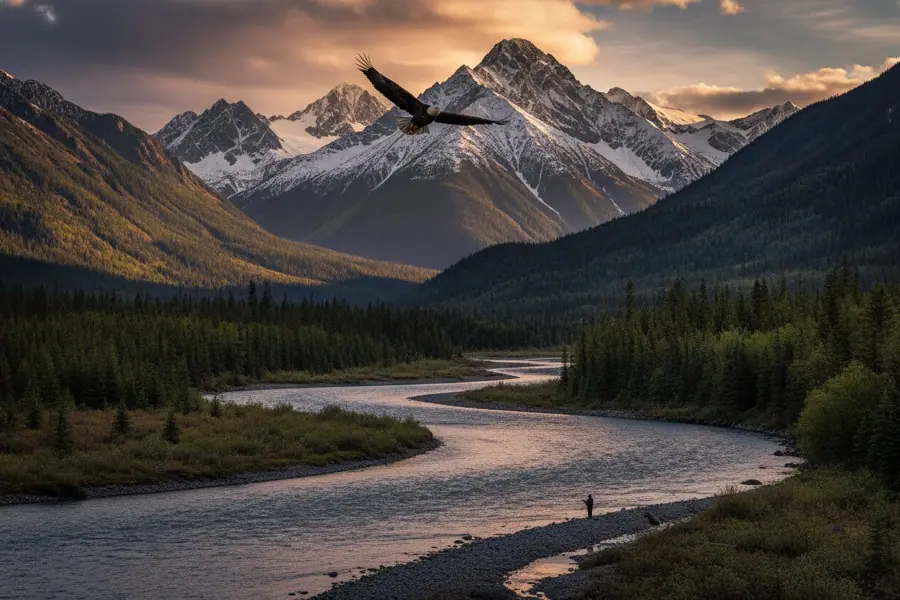
Bald eagleChilkat River, Haines, Alaska · November
200mm · f/8 · 1/2000 · ISO 500
120 ydWaited a whole gray day
How we work
The distance is the point
This is the line every safari keeps, drawn to scale. Your lens closes the gap; your feet don’t.
Every frame in the portfolio, placed by how far away it was made. The hatched part is closer than the park rules allow.
Elk, bison, moose, owls, foxes, sheep, eagles25 yards, at least
Bears and wolves100 yards, at least
- No baiting, no calling
- No thrown food, no store-bought mice for owls, no recorded bugles or howls. If the animal comes closer, it chose to.
- No drones
- They are banned in national parks, and wildlife hate them everywhere else too.
- The animal sets the pace
- If it stops feeding, stares at us or moves off because of us, we were too close, and we back away. That ends more shots than weather does.
- The rules, and then some
- Rut meadows close to off-trail walking from 5 PM to 7 AM; we keep to the road edge all day. Dens and nests are never shared, posted or tagged.
Before you come
What you need, and what we bring
- A long lens, or borrow one
- Anything that reaches 400mm is enough; 500 or 600 is better. Two loaner 500mm f/4 lenses travel in the van, free, first asked.
- Any camera body
- Any mirrorless or DSLR with a fast burst. Bring two batteries for every day, three in February.
- “I only have a phone”
- Come anyway. Wade clips phones to the spotting scope; digiscoped wolves at 600 yards are some of our guests’ favorite frames.
- A tripod or not
- Bring one if you have it. In the van every seat has a window and a beanbag, and that is how most frames are made.
- Layers for the hour you sit still
- Dawn in Moraine Park in September is about 30°F. February in Lamar Valley can be 20 below. A full list comes with your booking.
- Fitness
- Most shooting is within 200 steps of the van. Alaska’s coast means two miles a day on soft sedge in rubber boots, which we lend.
The guide
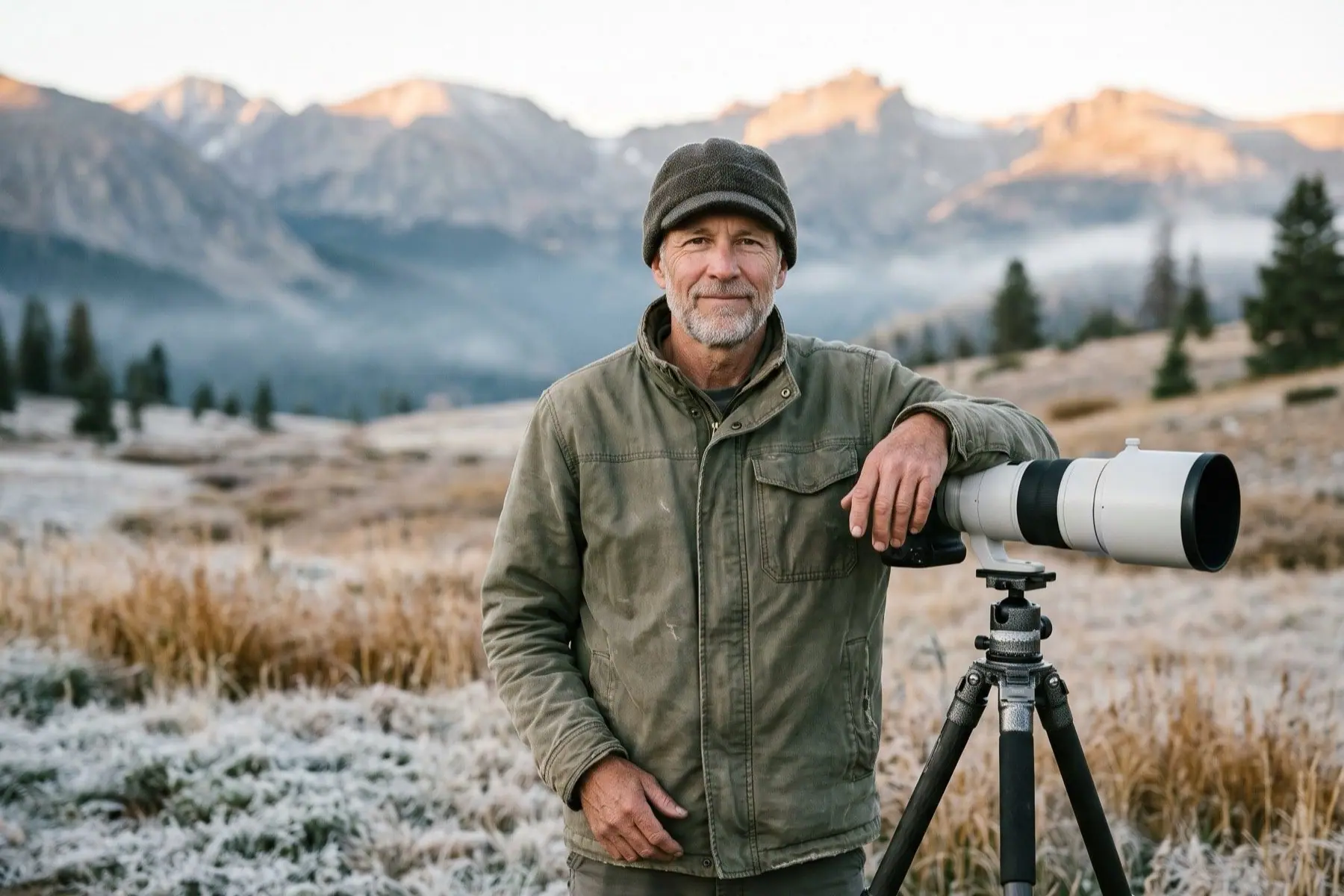
Wade Corwin
“In 2003 I sat four hours by the Big Thompson for a cow elk and her calf to cross. I missed it. I came back the next morning, and the next.”
I grew up in Laramie, Wyoming, and spent twelve summers on wildland fire crews across the West, which teaches you two things: where animals go when they want to be left alone, and how long you can sit still in the cold.
My grandfather left me a heavy old 400mm lens. The elk at the river was the first thing I ever aimed it at, and when I finally got the crossing, on the third morning, it was nothing like the frames I had imagined. It was better, because the cow never once looked at me.
I started guiding out of Estes Park in 2010 with a borrowed van and three friends of friends. It is still six seats at most, because that is how many windows the van has and how many people I can keep quiet on a pullout. My rule is the same as it was then: we go where the animals are, at their hour, and we leave before they mind.
- 2010first safari, the Colorado rut
- 16autumns in Moraine Park
- 5national parks, permitted and insured
Reviews
4.9 from 212 photographers
“I flew in from Munich for the rut. Wade had us on the pullout before the first bugle, and I had my frame by 6:58.”
Katrin W., MunichElk rut, September
“I came with a phone and binoculars. Wade clipped the phone to his scope and my wolf is on our fridge.”
Dana R., PhoenixWolves in winter, February
“Twenty years shooting for a living. What I paid for was Wade knowing which channel the bears use when the tide turns.”
Marcus O., SeattleBrown bears, July
“Four days and nobody once pushed closer for a better shot. That is why I’m going again.”
Priya S., TorontoOwls and calves, May
Where we start
Estes Park, Colorado
Every Colorado safari starts in Estes Park, at the east gate of Rocky Mountain National Park. The others start in Gardiner, Jackson, Homer and at Denali’s entrance; the meeting place comes with your booking.


- ColoradoEstes Park · Mountain Time
- YellowstoneGardiner, Montana · Mountain Time
- Grand TetonJackson, Wyoming · Mountain Time
- Lake ClarkHomer, Alaska · Alaska Time
- DenaliThe park entrance · Alaska Time
Questions
Before you reserve
What if the animals don’t show?
Some mornings they don’t. That is what the four or five days are for: Wade plans every safari around the weeks the animals are reliably there, and in sixteen years no group has gone home without its species. He won’t promise a pose; he will promise the right meadow at the right hour.
What happens in bad weather?
We go out in it. Fog, frost and falling snow make the best wildlife frames. Only lightning or closed roads keep us in, and then we edit. In Alaska a weather day for the floatplane is built into the trip.
I’m flying in from abroad. How does that work?
Book from home: $500 holds your spot ($1,000 for Alaska’s coast), the rest is due 60 days before. Every time on this site is local park time (Mountain, or Alaska time for Lake Clark and Denali). Colorado safaris pick up at Estes Park; Denver airport is about 90 minutes away, and Wade sends a shuttle list.
What’s included?
Lodging, the van and its driver-guide, park fees, breakfasts and lunches, loaner lenses and beanbags. Alaska trips include every meal and the flights from Homer. Dinners elsewhere are on your own, usually together.
How close do we get?
No closer than the rules: 100 yards from bears and wolves, 25 yards from elk, bison, moose and everything else, and farther when the animal says so. That is why we bring long lenses.
Can I cancel?
More than 60 days out, your deposit comes back less $100. Inside 60 days, it moves once to another safari. If we cancel, everything comes back.
Reserve
Hold a spot
Pick the safari and its first day. $500 holds a spot ($1,000 for Alaska’s coast) and the rest is due 60 days before. Wade writes back himself within a day with the gear list and the meeting point.
- 1Service
- 2Date
- 3Details
This is an example website made by Humfrid, so nothing was booked and no card was charged. On a real one, the deposit is paid right here and the date is yours. Get a website like this