The shadow is the subject.
32°48′ N · 106°16′ W
White Sands, New Mexico
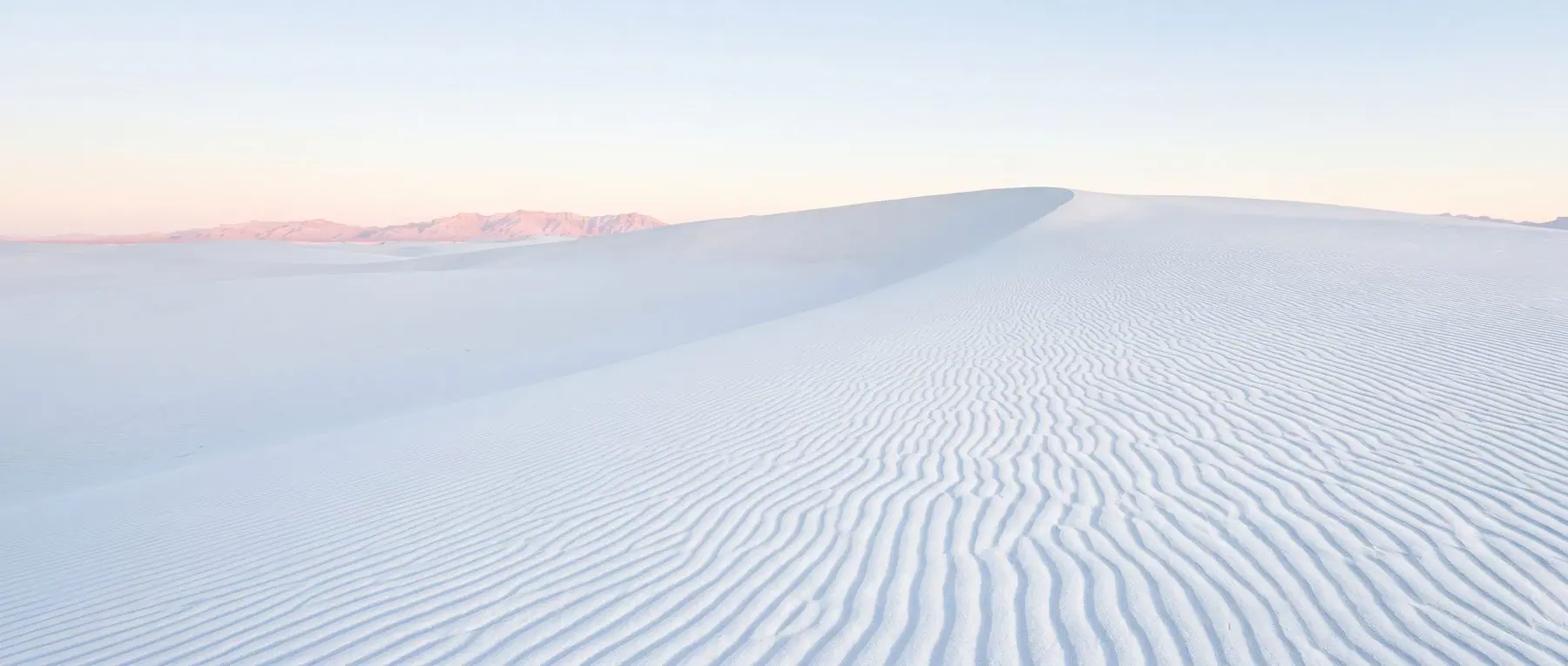
Alkali Flat · Feb 20, 7:00 am MST · f/11 · 1/30 · ISO 100
sun 2.6° · shadow 22×
Moonrise · Sat Feb 20, 2027Sun sets 5:54 · full moon rises 5:56 pm MST
$185BookSmall sunrise and moonrise workshops in the white gypsum dunes of White Sands National Park, for six photographers at a time, with Paz Archuleta. Every hour on this page is one day, February 20, 2027: watch the line under the menu. That’s a pin, ten pixels tall, and its shadow at the length the sun would draw it in the dunes at that minute.
6:18 am MST · dawn
Three ways into the white
-
Sunrise in the dunes
Saturdays and Sundays, Nov 14 to Apr 25
Meet an hour before sunrise at the visitor center, in the dunes before the gate opens, out by 9:30. About 3½ hours, a mile and a half of soft sand.
$165Book
-
Moonrise on the full moon
The six evenings below
Meet 90 minutes before sunset. The long east shadows, the sunset, the earth’s shadow over the Sacramentos and the full moon coming up out of it. Out about two hours after moonrise.
$185Book
-
Sun to moon
Sat Feb 20, 2027 only
The whole day the sun sets at 5:54 and the moon rises at 5:56: the sunrise, lunch and the edit at my table in Alamogordo, a nap, then the moonrise. One print of your best frame, mailed.
$395Book
The full moons of the season, sunset and moonrise, Mountain Time
- Tue Nov 24 sunset 4:59 pm
moonrise 4:56 pm MST - Wed Dec 23 sunset 5:04 pm
moonrise 4:42 pm MST - Thu Jan 21 sunset 5:27 pm
moonrise 4:42 pm MST - Sat Feb 20 sunset 5:54 pm
moonrise 5:56 pm MST two minutes apart - Sun Mar 21 sunset 7:17 pm
moonrise 6:51 pm MDT - Mon Apr 19 sunset 7:38 pm
moonrise 6:45 pm MDT
Sat Feb 20, 2027 · Mountain Standard Time
The morning, measured in shadows
Under each hour, a pin and its shadow at true length. The number is how many times longer the shadow is than the thing that casts it.
-
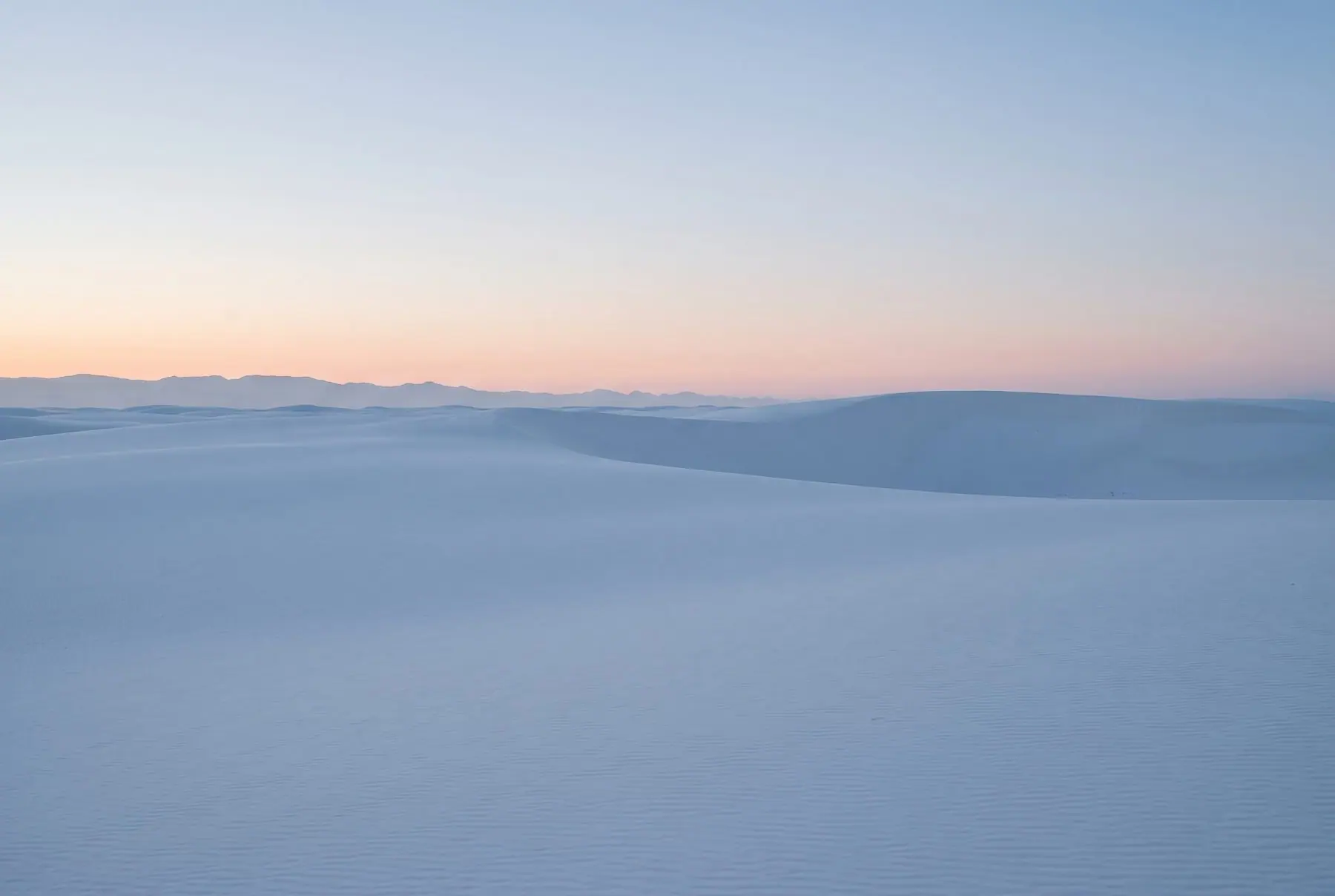
6:18 amsun −6° · no shadow yet
Blue sand
Civil dawn. The whole dunefield is one even blue-white and nothing casts a shadow. Behind us the full moon is going down into the San Andres. We set up on a crest I chose the afternoon before, facing west, because the mountains light first.
-
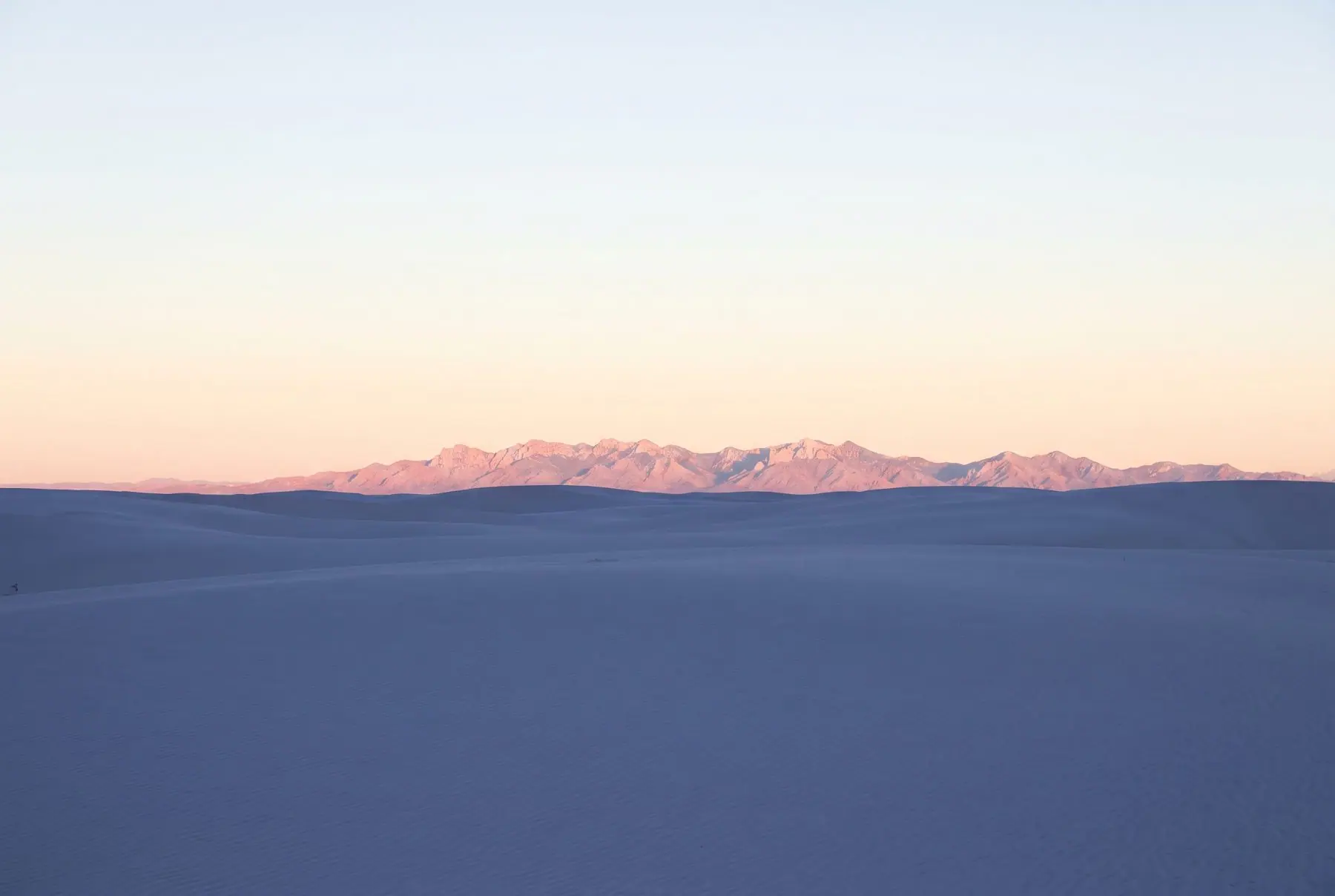
6:43 amsun on the horizon
The mountains first
Sunrise comes over the Sacramentos behind us and lands on the San Andres, thirty miles west, before it reaches the sand. For about four minutes the range is rose and the dunes are still blue. Long lens, f/8, and don’t move.
-
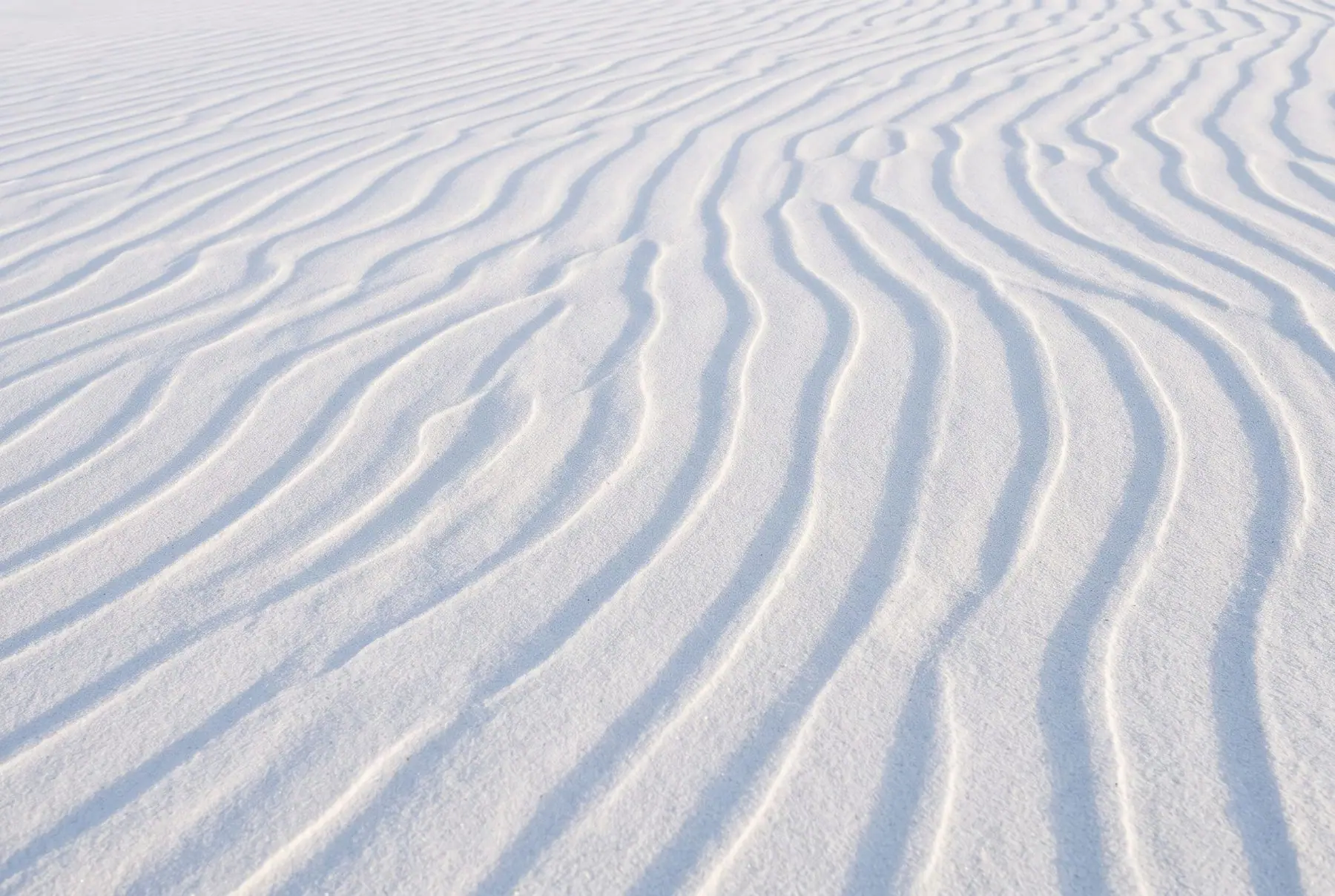
7:00 amsun 2.6° · shadow 22×
Every ripple
The sun is two and a half degrees up and a ripple a quarter inch high throws a shadow five inches long. This is the twenty minutes the whole morning is for. Low, close, and expose for the white.
-
7:15 amsun 5.6° · shadow 10×
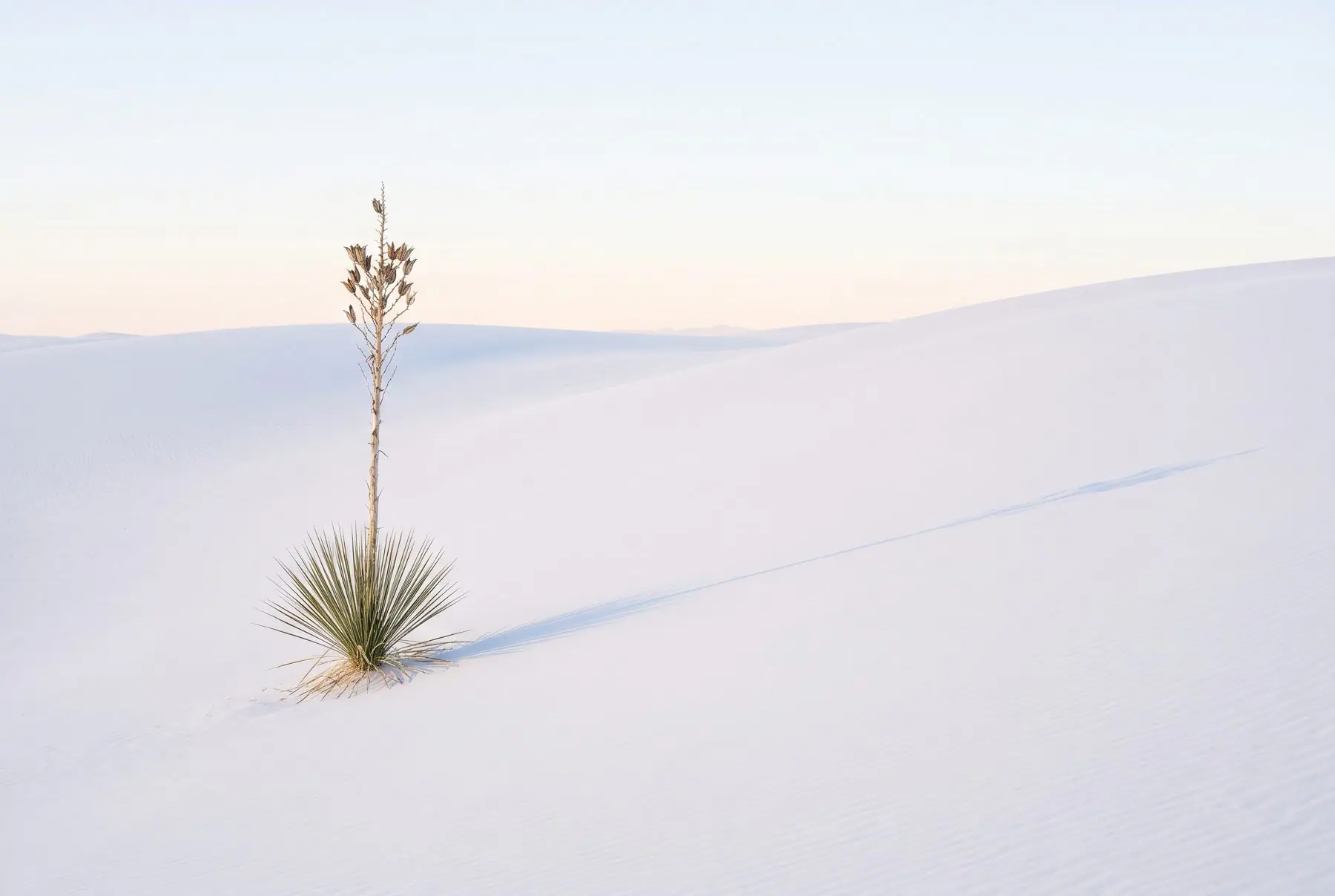
One yucca
The soaptree yucca on the slope east of the crest. Its stalk is about eight feet tall; at 7:15 its shadow is about eighty. We wait for it to reach the ripples and stop.
-
7:30 amsun 8.6° · shadow 6.6×
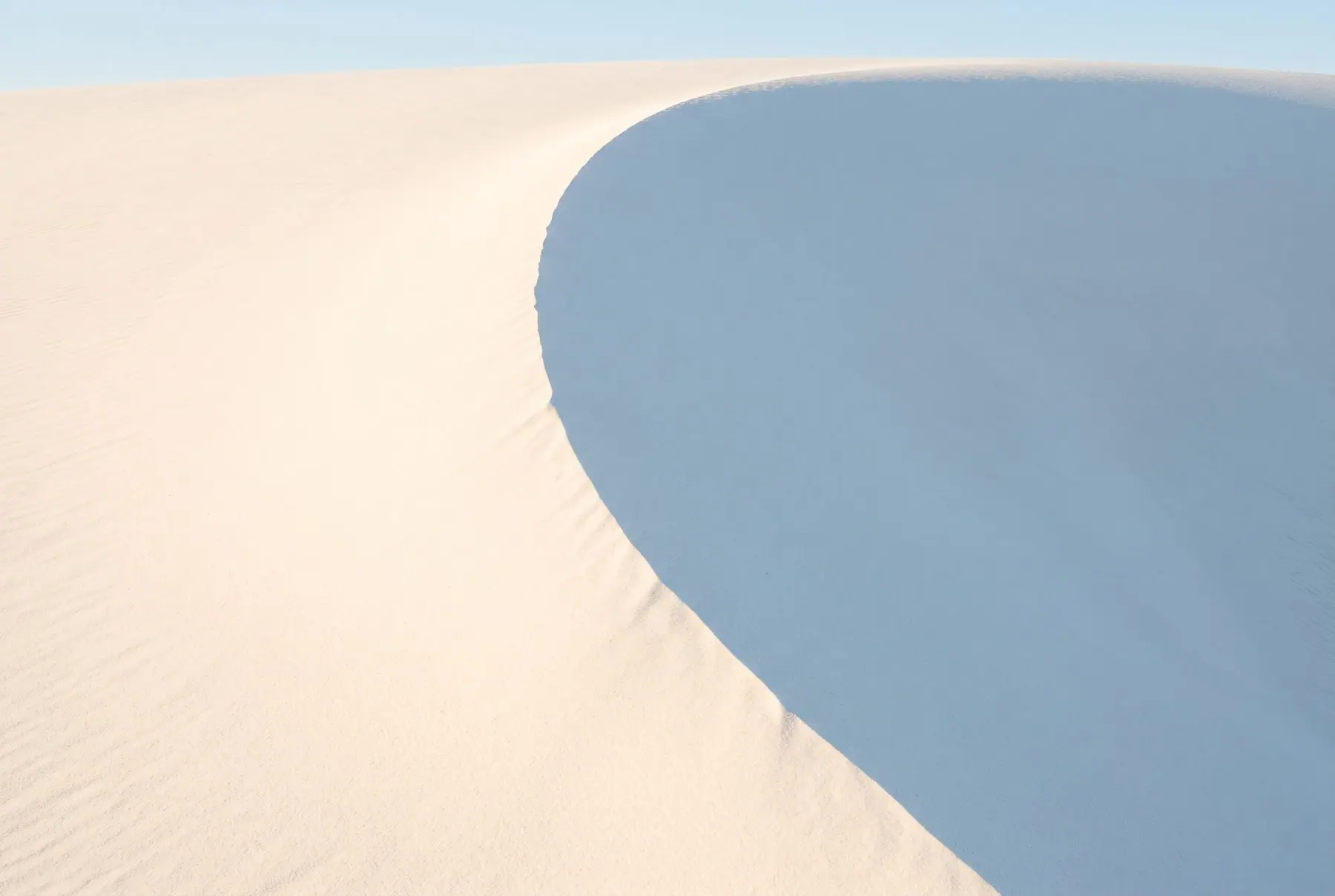
Half and half
Slip faces go blue, windward sides go warm. One curve, two colors, nothing else in the frame.
-
8:00 amsun 14.5° · shadow 3.9×
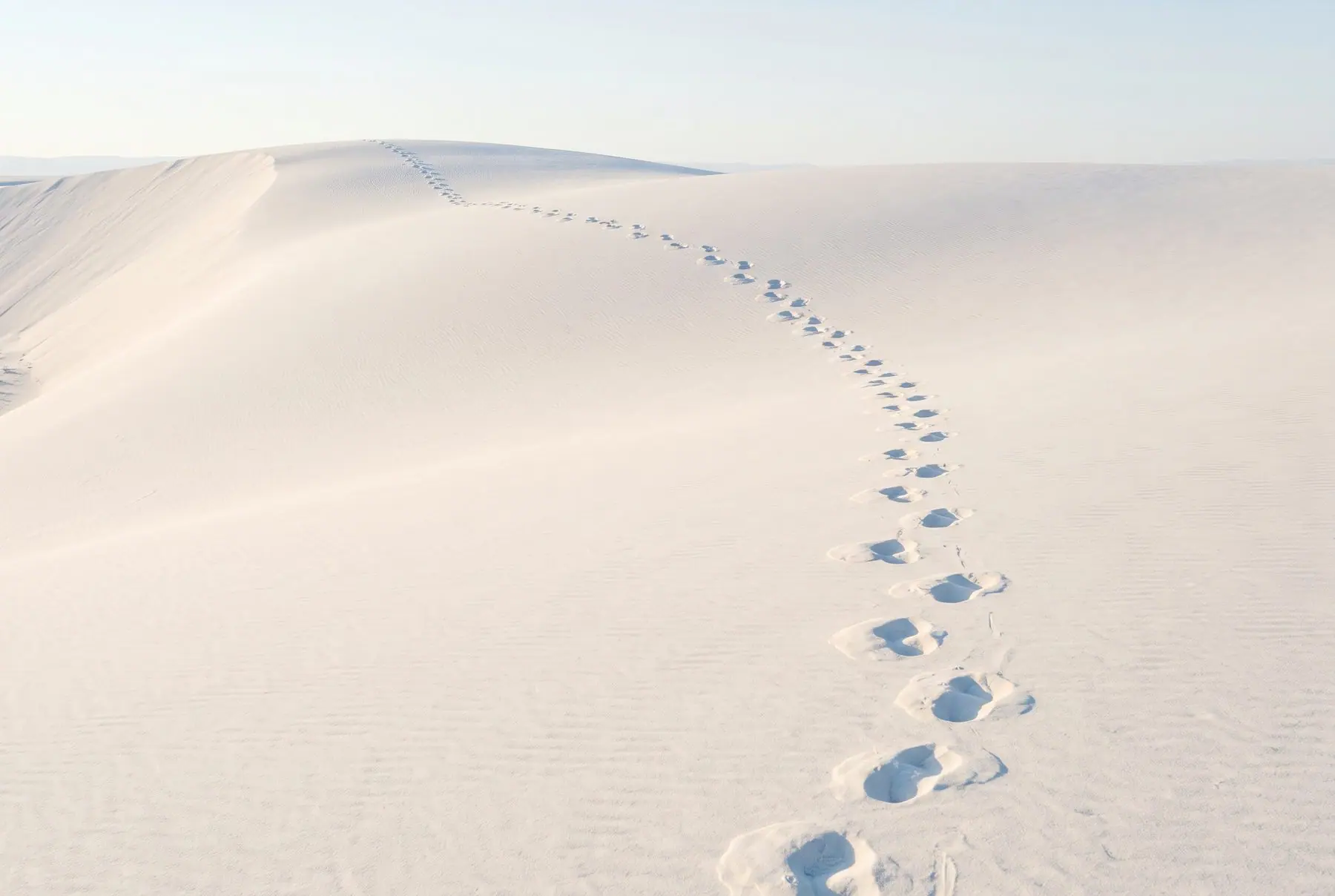
Our own tracks
Now the footprints are the subject, ours included. Every one holds a little pool of blue. We walk out along the line we made coming in.
10:00 am · sun 35° · shadow 1.4×
Frames, a few winters and one August
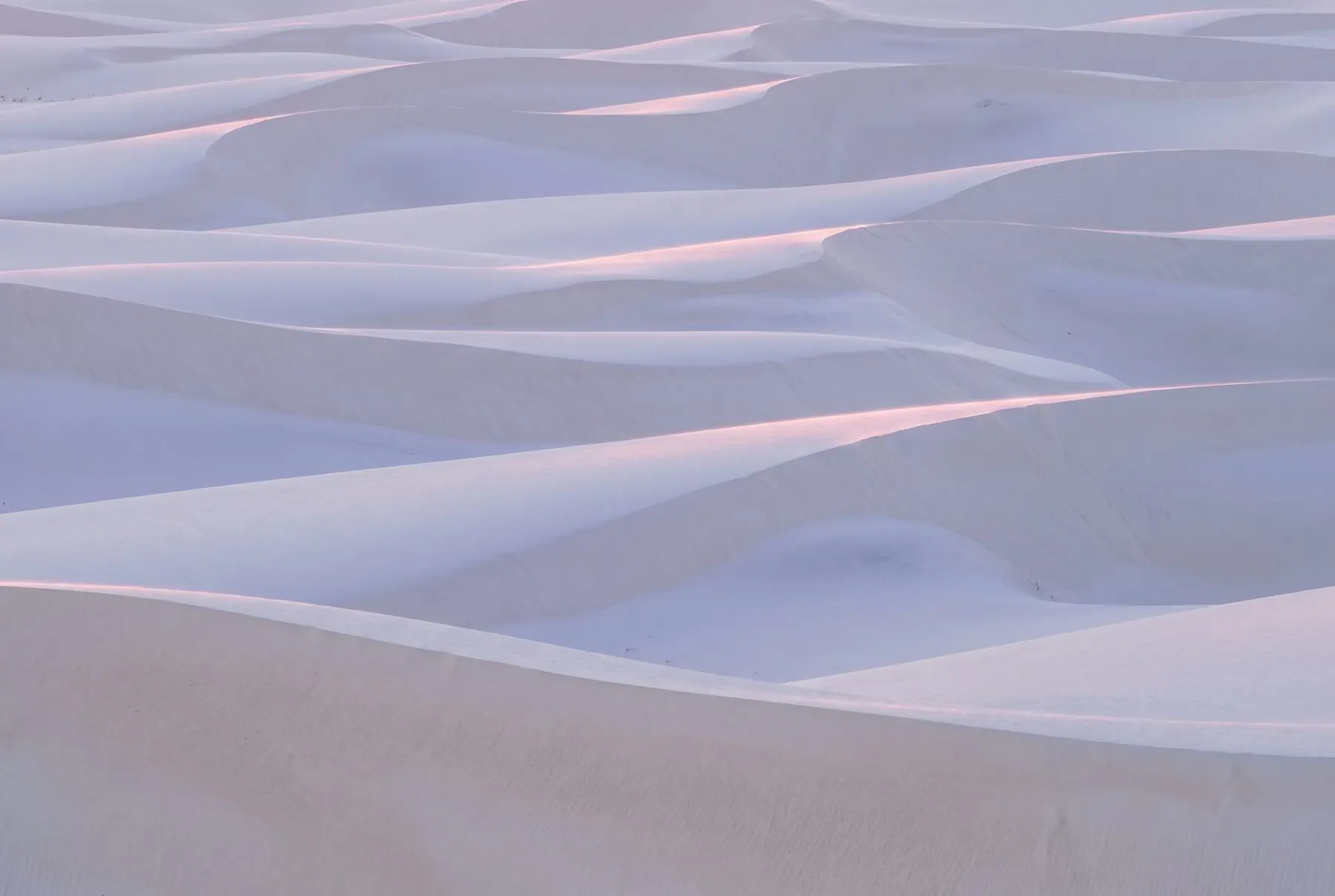
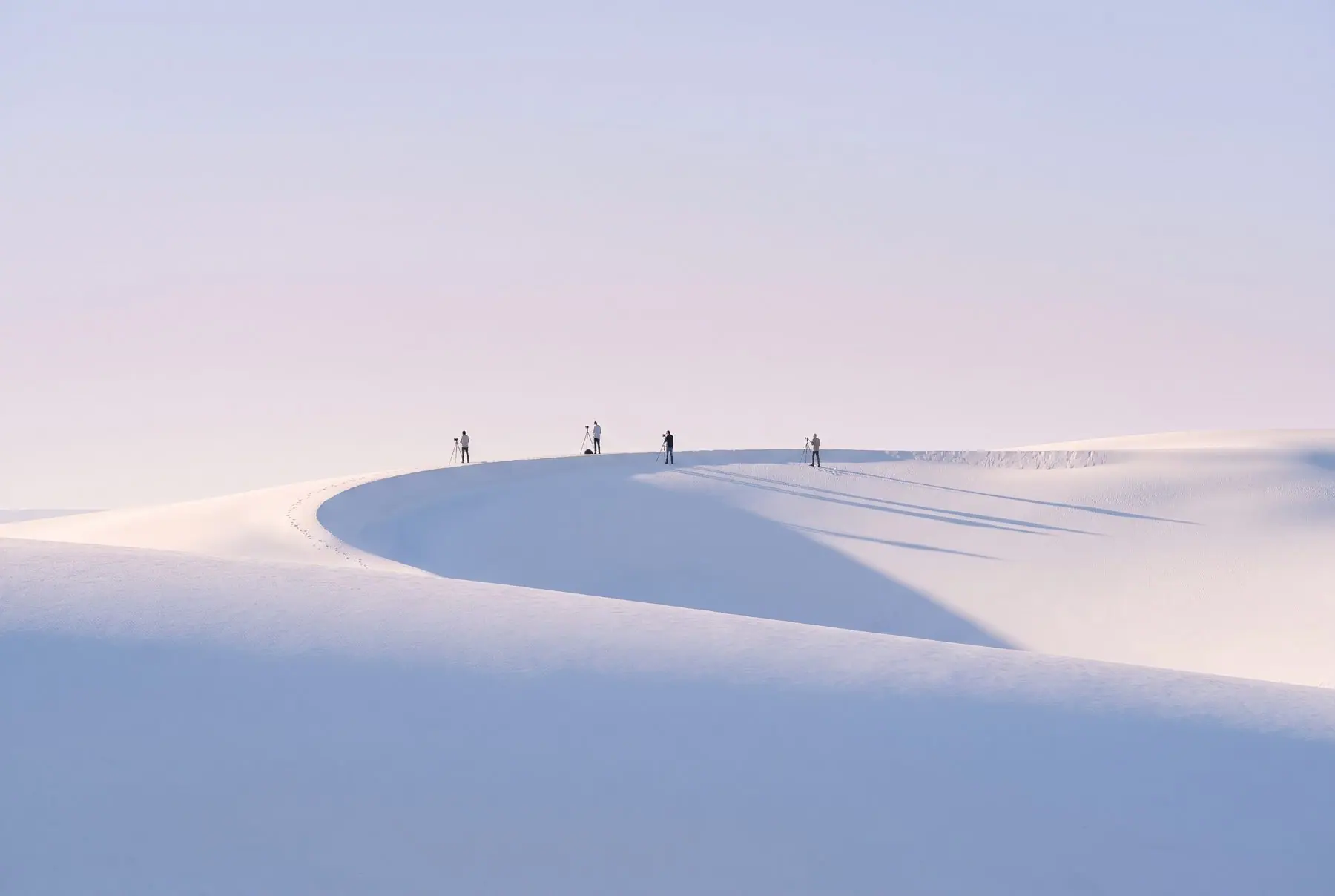
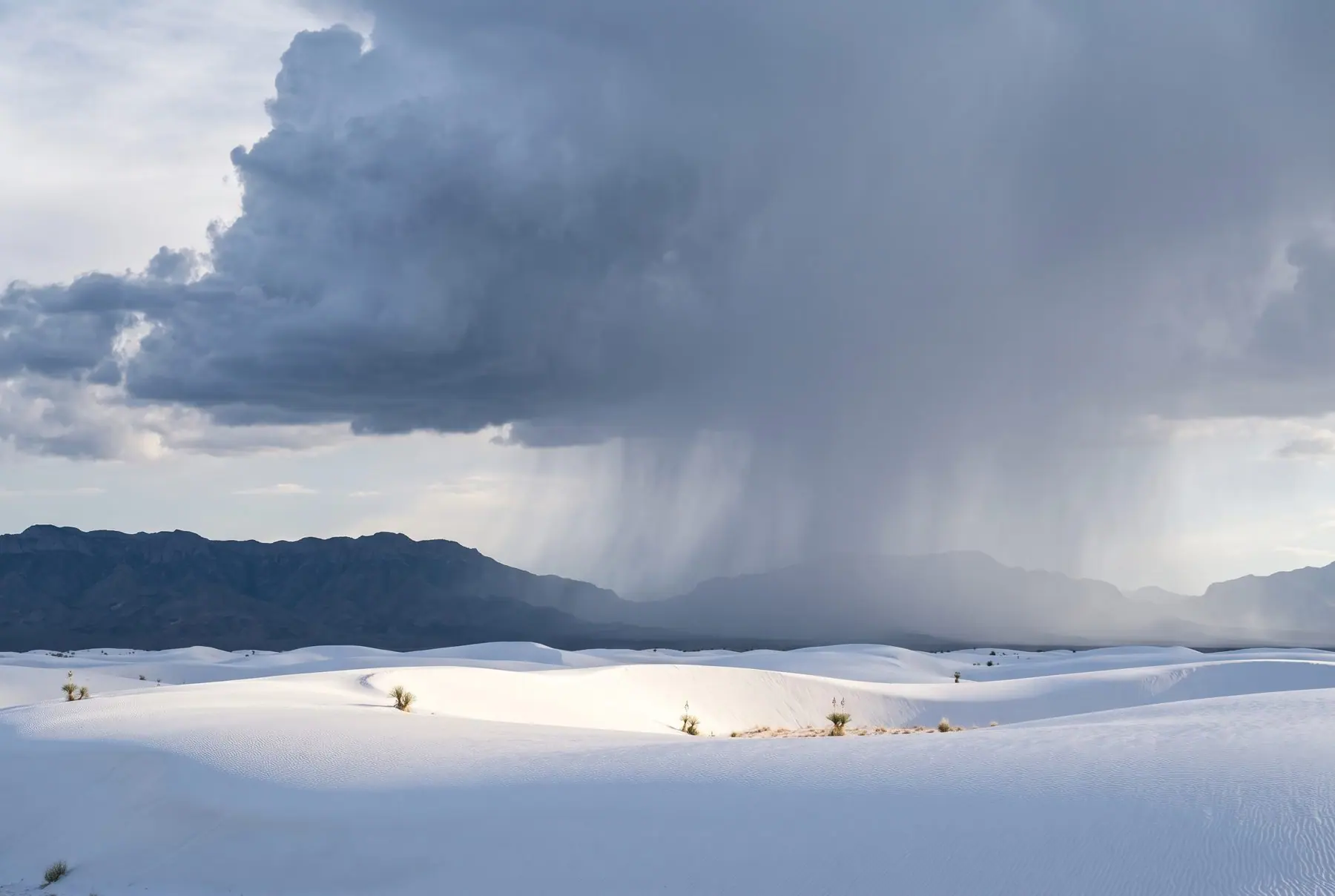
Prints of any frame here, on cotton rag, 16 × 20 in. $240, signed. Ask when you book and it comes with you on the morning.
12:20 pm · sun 46.4°, the highest it gets today · shadow 1.0×
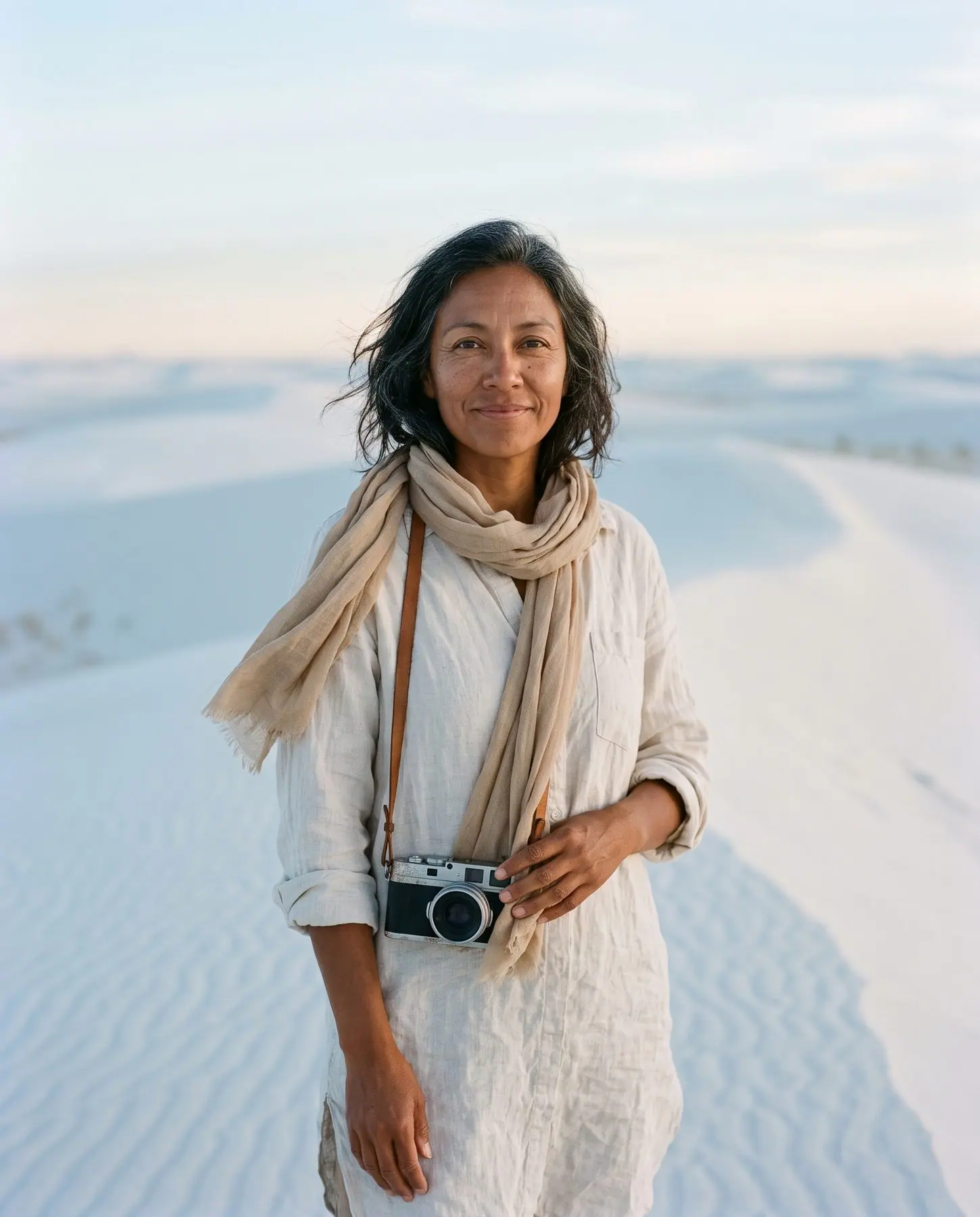
Paz Archuleta
“Noon is the one hour I’ll stand in front of a camera. Nothing out here has a shadow worth taking.”
I grew up in Tularosa, fifteen miles north of the dunes, and I didn’t photograph them until I was twenty-nine. My father drove a truck on the missile range for thirty-one years and kept an old film camera in the glovebox. One January Sunday in 2009 I borrowed it, went out at sunrise because he said that was when the sand turned blue, and shot one soaptree yucca and its shadow at 7:20 am. That print is still on my kitchen wall.
I spent twelve years printing for a portrait studio in Las Cruces, and every weekend I was in the dunes. I started taking people with me in 2014 and have run Gypsum under the park’s commercial use authorization since 2016. I keep it to six people because six tripods fit on one crest without anyone’s shadow in anyone’s frame.
Between the sunrise and the moonrise on Feb 20, you’ll eat lunch at my table in Alamogordo while we go through your morning on a big screen. Then go and sleep. The moon is at 5:56.
3:00 pm · sun 31.9° · shadow 1.6×
What to bring, and what you don’t need
- Any camera, or your phone
- Phones do well here. Set exposure to +1 or +1⅔: the white fools every meter into gray sand. We fix that in the first ten minutes.
- A tripod for the moonrise
- Not needed at sunrise. For the moon it is. I bring two to lend.
- One lens, ideally
- Gypsum is as fine as flour. Change lenses inside a bag, or bring a wide and a long on two bodies and don’t change at all.
- Layers
- February dawns are often below freezing; by 9 am it’s sixty. Gloves you can work buttons in.
- Shoes you can empty
- Soft sand, about a mile and a half, up and down dunes up to fifty or sixty feet. Some people go barefoot by 8:30; the gypsum stays cool.
- Water and a headlamp
- We walk in and out in the half-dark. Red light only once we’re on the crest.
Six photographers, one guide, all levels. Ages 12 and up with an adult.
4:00 pm · sun 21.7° · shadow 2.5×
From the crest
I booked it from Hamburg the week before I flew. Paz texted the meet time in Mountain Time and in mine, and at 6:43 exactly the mountains went pink.
Phone only. She showed me the exposure trick in the parking lot and my yucca is now my lock screen and my sister’s.
I shoot weddings for a living and I came for the moonrise. I’ve never seen anyone plan a crest around a two-minute gap. Worth the drive.
Sat Feb 20, 2027 · the moonrise group
The evening, and the two minutes
-
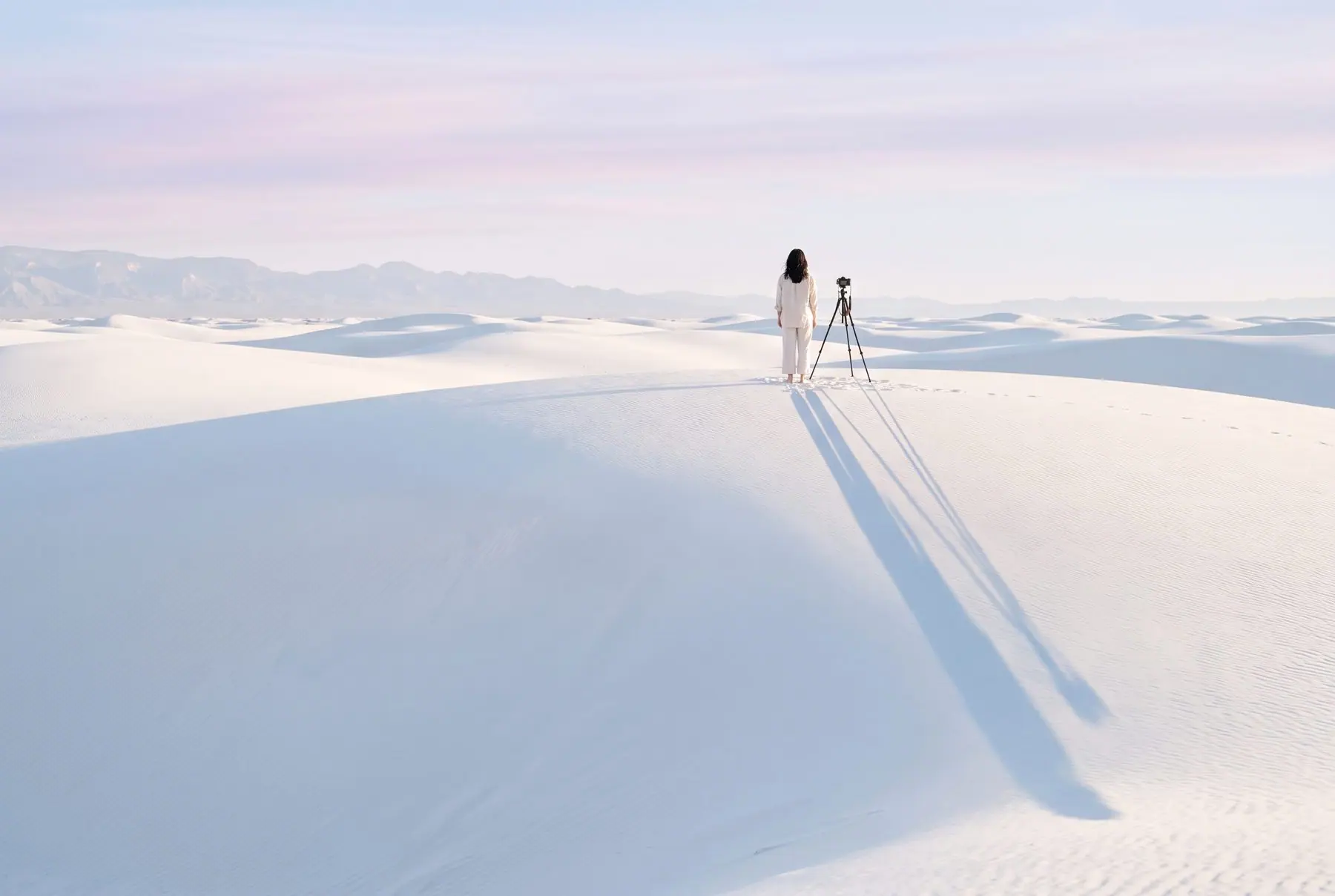
5:30 pmsun 4.2° · shadow 13.6×
The long east shadows
Every ripple again, lit from the other side. I walk you down the crest one at a time so nobody’s shadow crosses anyone’s frame.
-
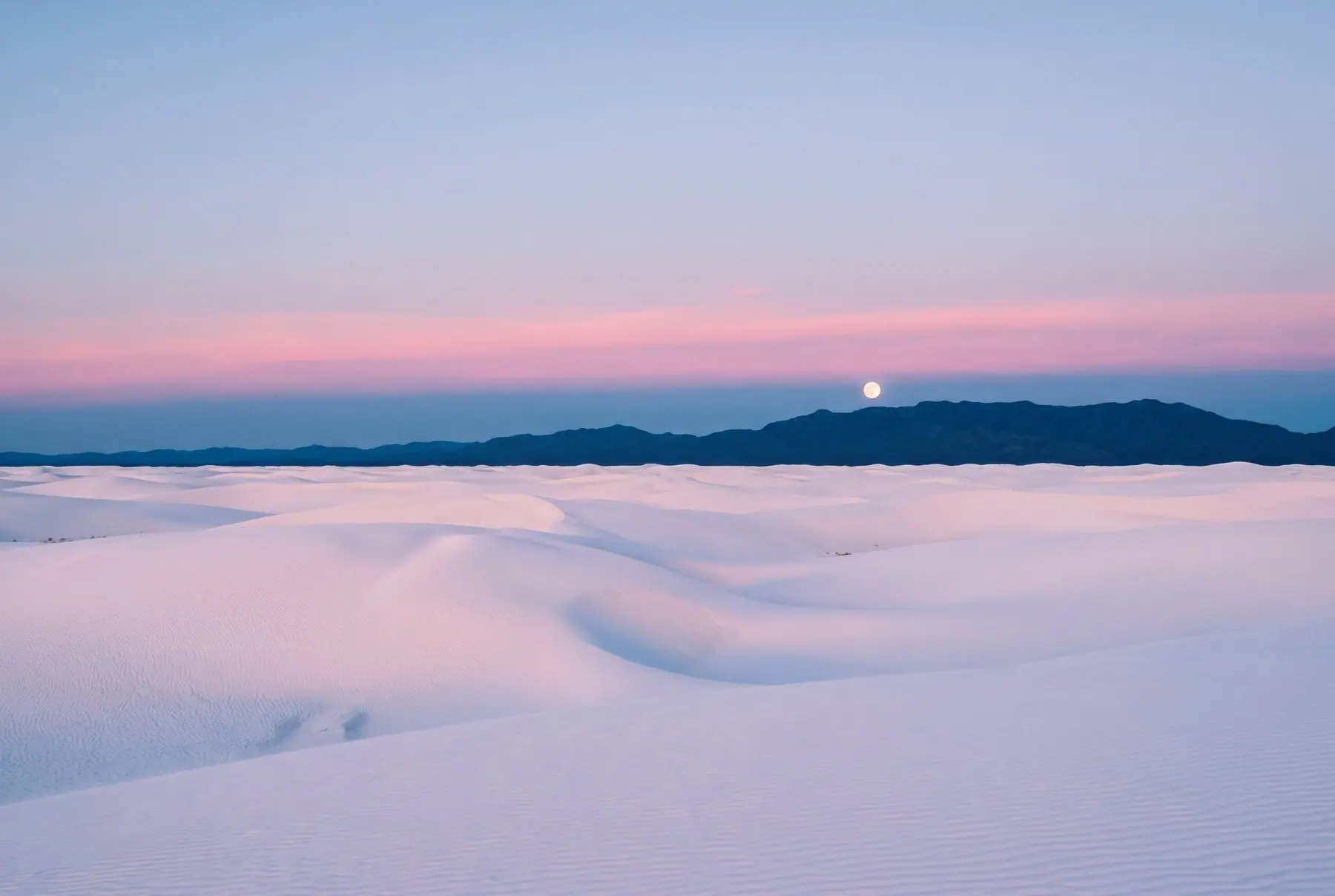
5:56 pmmoon on the horizon
Moonrise
Two minutes later the full moon comes up into the earth’s shadow, held back a few minutes by the Sacramentos. The sand is still pink, the moon is the same brightness as the sky. One frame holds both.
-
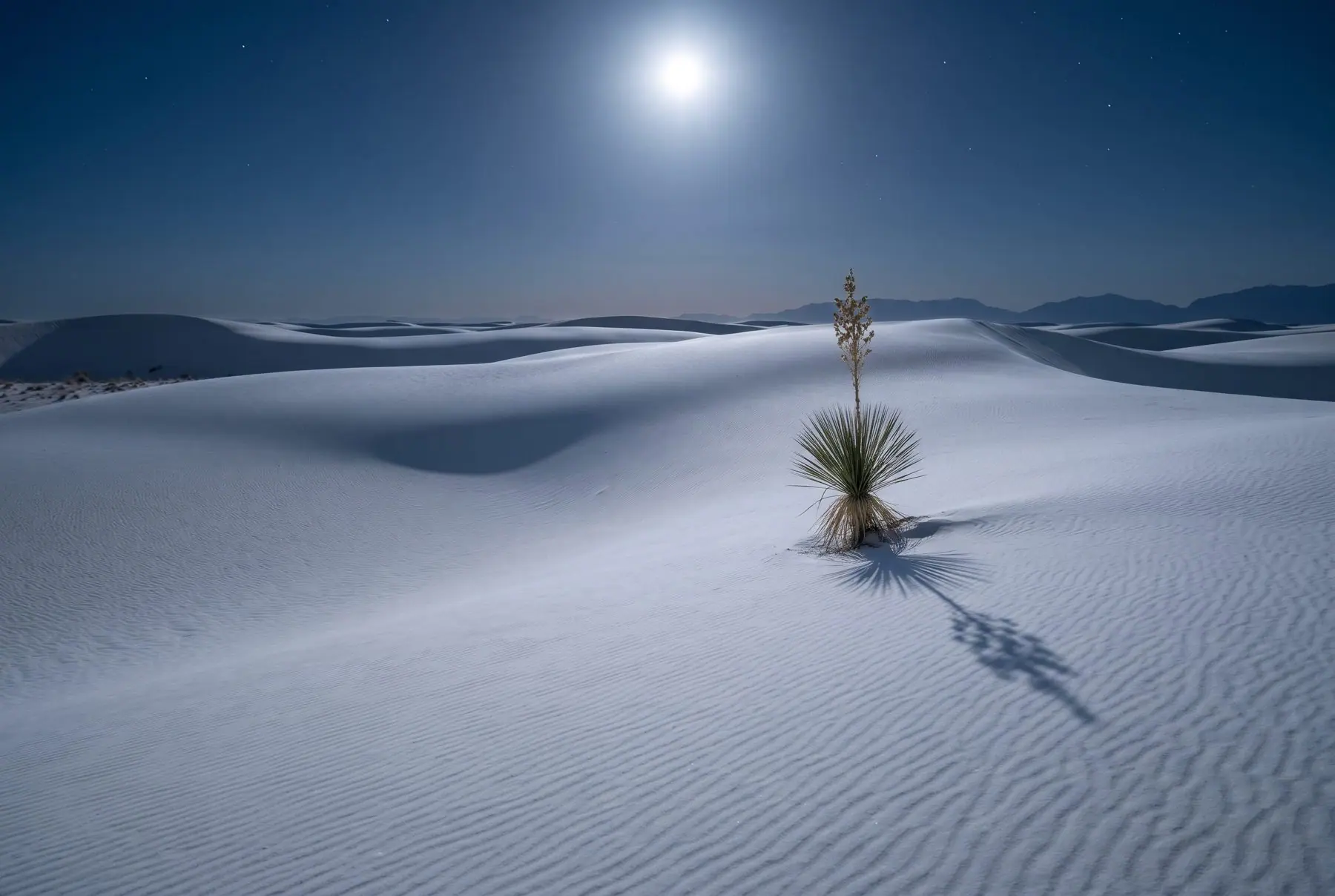
7:00 pmmoon 11.7° · moon shadow 4.8×
Moonlight
The moon is high enough to cast shadows of its own, west this time. Thirty seconds at f/4, ISO 400, and the yucca draws itself on the sand again.
6:20 pm · moon 3.7° · moon shadow 15×
Where we meet
In the lot at the White Sands Visitor Center on US 70, 15 miles southwest of Alamogordo. We drive Dunes Drive together, about eight miles, and walk in from there. 275 square miles of gypsum, the largest gypsum dunefield on earth, and I know where the ripples were last weekend.
From El Paso’s airport, about an hour and three quarters. From Albuquerque, about three and a half hours. Arrive the night before a sunrise.


6:40 pm · moon 7.7° · moon shadow 7.4×
Questions
What time zone are the times in?
Mountain Time. MST until Sunday, March 14, 2027, then MDT (one hour later on the clock). Every time I text you says which, and I add yours if you’re booking from somewhere else.
How do you get in before the park opens?
Commercial workshops in the park need a permit, and Gypsum works under a commercial use authorization from the National Park Service. On sunrise mornings we enter early under its terms. You still need the park’s entrance pass for your car, at the gate or online.
What if the missile range closes the road?
The park sits beside White Sands Missile Range, and during some tests US 70 and Dunes Drive close for a few hours. The closures are posted ahead. If one lands on your morning or evening, I move you to the next one or refund you.
What if it’s cloudy?
A thin high cloud is a gift: pink sky, soft shadows. A solid overcast flattens everything, and then you choose: come anyway at half price, or move to another date. Strong spring wind (March and April) can blow gypsum; I’ll tell you the night before.
I only have a phone. Is that enough?
Yes. About a third of each group shoots on a phone. A tripod mount for it helps at moonrise; I have two.
How fit do I need to be?
You need to walk a mile and a half on soft sand and climb a dune or two. We go slowly; nobody runs for the light because we’re already standing in it.
Where do I stay?
Alamogordo is 15 miles away and has plenty of rooms. Las Cruces is 52 miles, El Paso’s airport about an hour and three quarters.
7:00 pm · moon 11.7° · moon shadow 4.8×
Hold a place on the crest
A $50 deposit holds a sunrise or a moonrise, $100 the whole day. Pick your date, tell me how many of you, and I text you back the meet time in Mountain Time and in yours.
If the missile range closes the road or the sky is solid gray, I move you or refund you. Your call.
- 1Service
- 2Date
- 3Details
This is an example website made by Humfrid, so nothing was booked and no card was charged. On a real one, the deposit is paid right here and the date is yours. Get a website like this