Polar Hour, northern-lights photo tours out of Fairbanks, Alaska
Fairbanks, Alaska · 64.8° NLate August to mid-AprilSix photographers a nightHotel pickupParkas and boots lent★ 4.9 · 211 reviews
The night starts at 9:30 pm
We drive until the sky is clear, and we wait until it moves.
Northern-lights photo tours with Kit Delaney, six photographers at a time, on the dark roads and ridges north of Fairbanks. Scroll down and the night goes on: the clock up top runs to 3 am.
Tours
Three ways to spend a night
-
Late Aug to mid-Apr · 9:30 pm to about 3 am
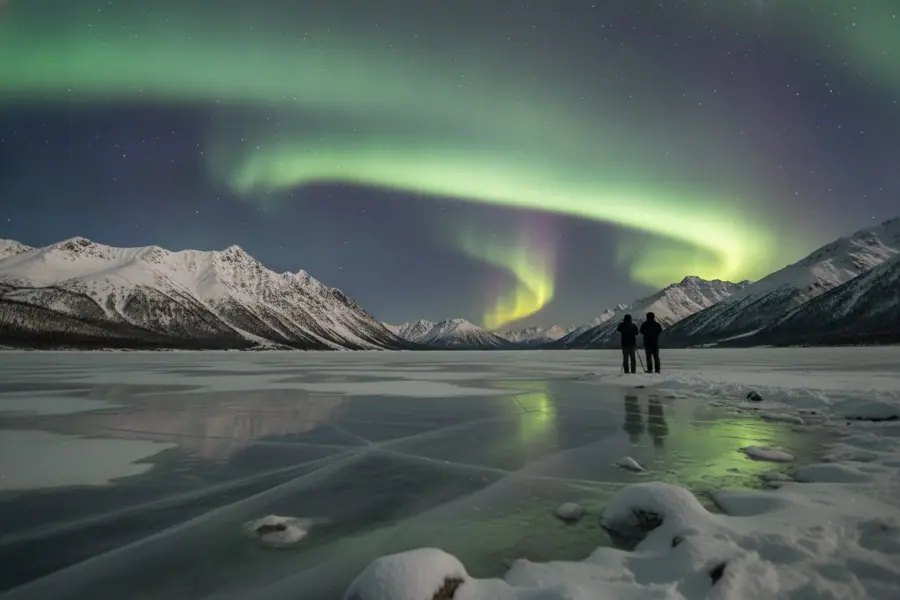
The aurora night
Pickup at your hotel, one to three dark spots in the hills north of town chosen by the sky that night, a camera set up for you before the lights come, cocoa, and a drop-off before 3:30.
$185a photographerBook
-
Any three open nights in one stay
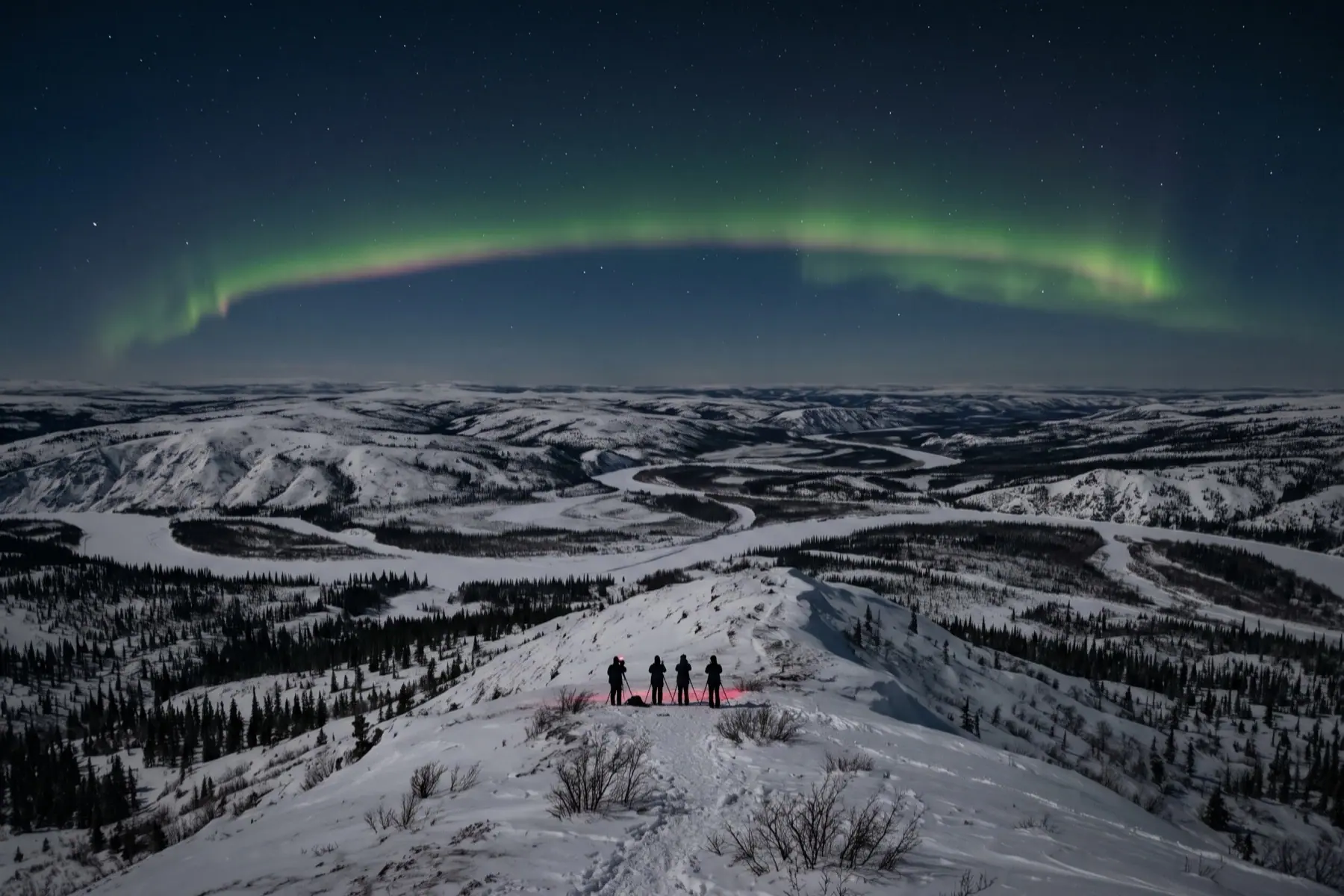
Three-night pass
The lights are a probability, not a show time. Three nights in one visit is what Kit tells everyone flying up for them. Book the first, add the other two as the forecast firms up.
$495a photographerBook
-
Your night, your pace
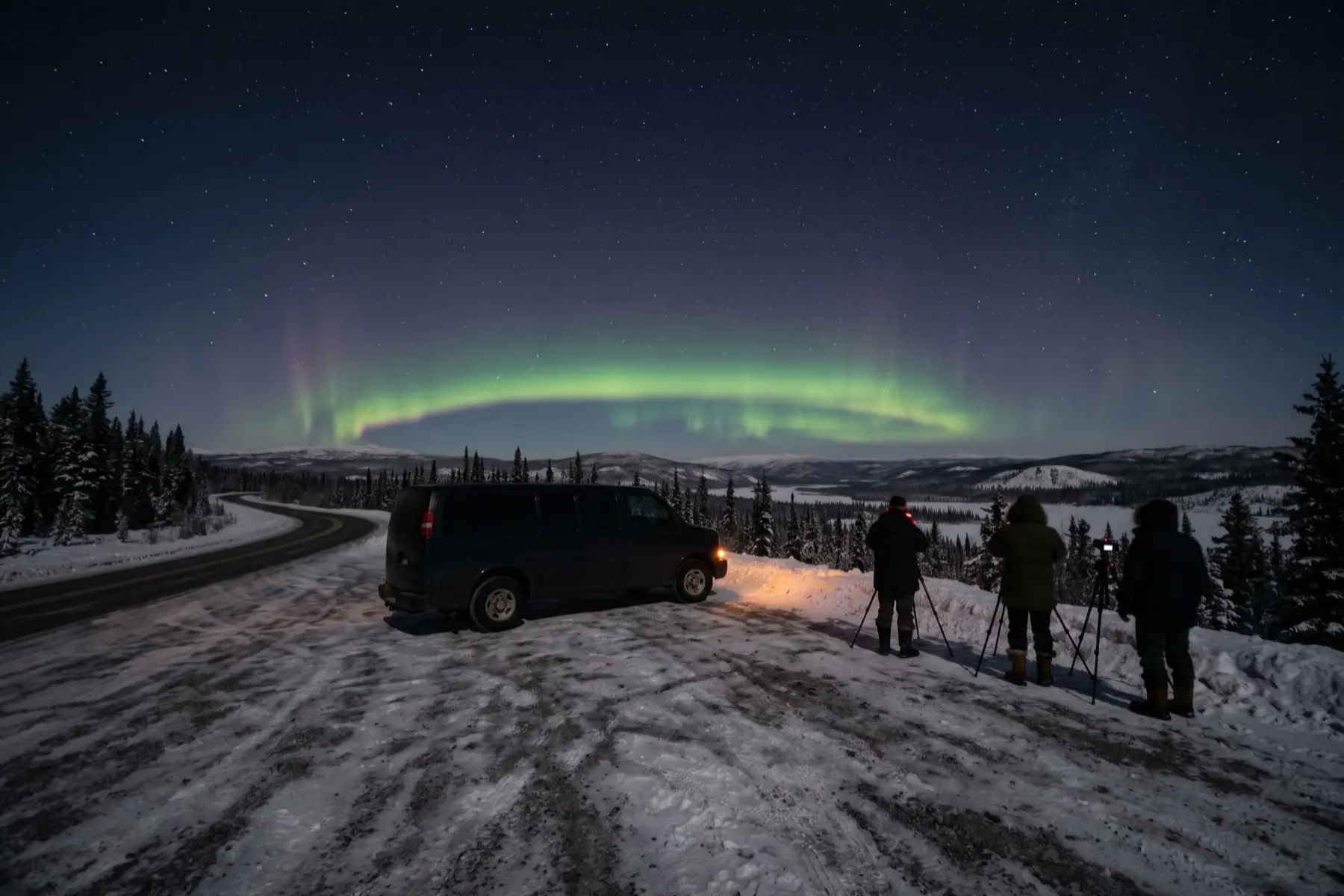
Private night
The van just for you: a couple, a family with teens, or a working photographer who wants to sit on one ridge for five hours waiting for the corona.
$720up to fourBook
The calendar
February 2027: nine nights open
Every open night leaves at 9:30 pm AKST. The green number is how many of the six seats are left. February is our favorite month: deep dark, the coldest clear skies, and the equinox activity starting to build.
The season runs late August to mid-April. Past April 12 the sky never gets dark enough.
How Kit decides, at 5 pm
Reading a night
Two things matter: will the sky be clear, and will the lights be busy. Here is how a good February night reads.
Sample night · an illustration of how we read the forecast, not live data
Activity (Kp), by three hours, AKST
- 26–9 pm
- 39–12
- 512–3 am
- 33–6 am
Cloud on the hills north of town, by hour
- 9p80%
- 10p55%
- 11p25%
- 12a10%
- 1a5%
- 2a10%
- 3a30%
Go
Clearing by 11 pm, busy between midnight and 3. Kit texts everyone booked: “On. Dress for −24°F. Pickup 9:30.”
One February night, AKST
9:30 pm to 3:00 am
-
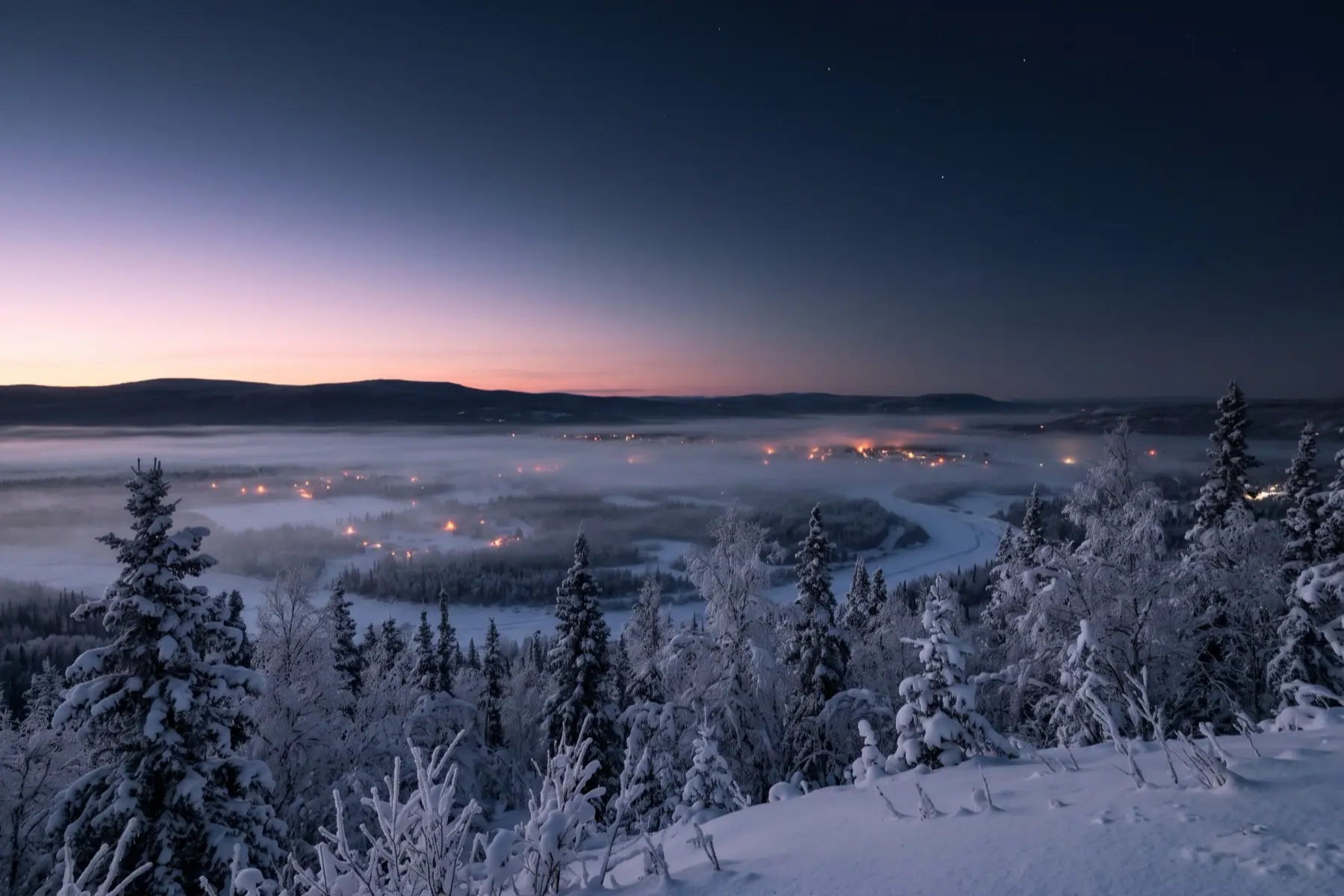
Pickup
Kit at your hotel door in a warm van. Parkas, insulated boots and big mitts in the back in every size; you change in the lobby.
-
The first dark road
Twenty miles north, a pullout above the trees where the town glow is behind a hill. Tripods out, cameras set: manual, f/2 or wider, 6 to 10 seconds, ISO 1600 to 3200, focus taped on a star.
-
The quiet arc
Most nights start with a pale band low in the north. It looks gray to the eye and green to the camera. Practice frames, and a first look at your histogram.
-
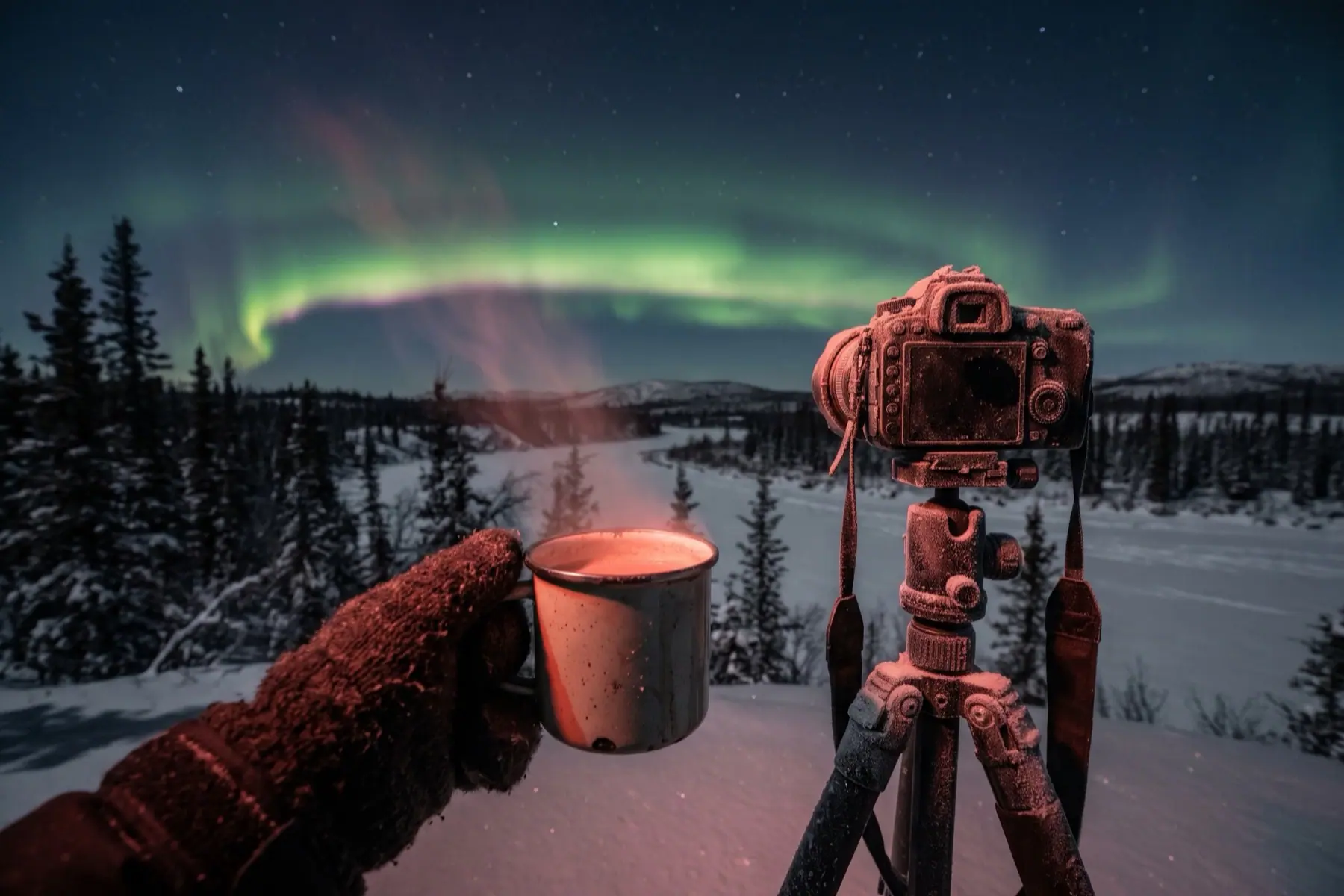
Cocoa
Thermos round, hand warmers swapped, batteries out of pockets and back into cameras. Kit checks the magnetometer on her phone and moves you if the sky says so.
-
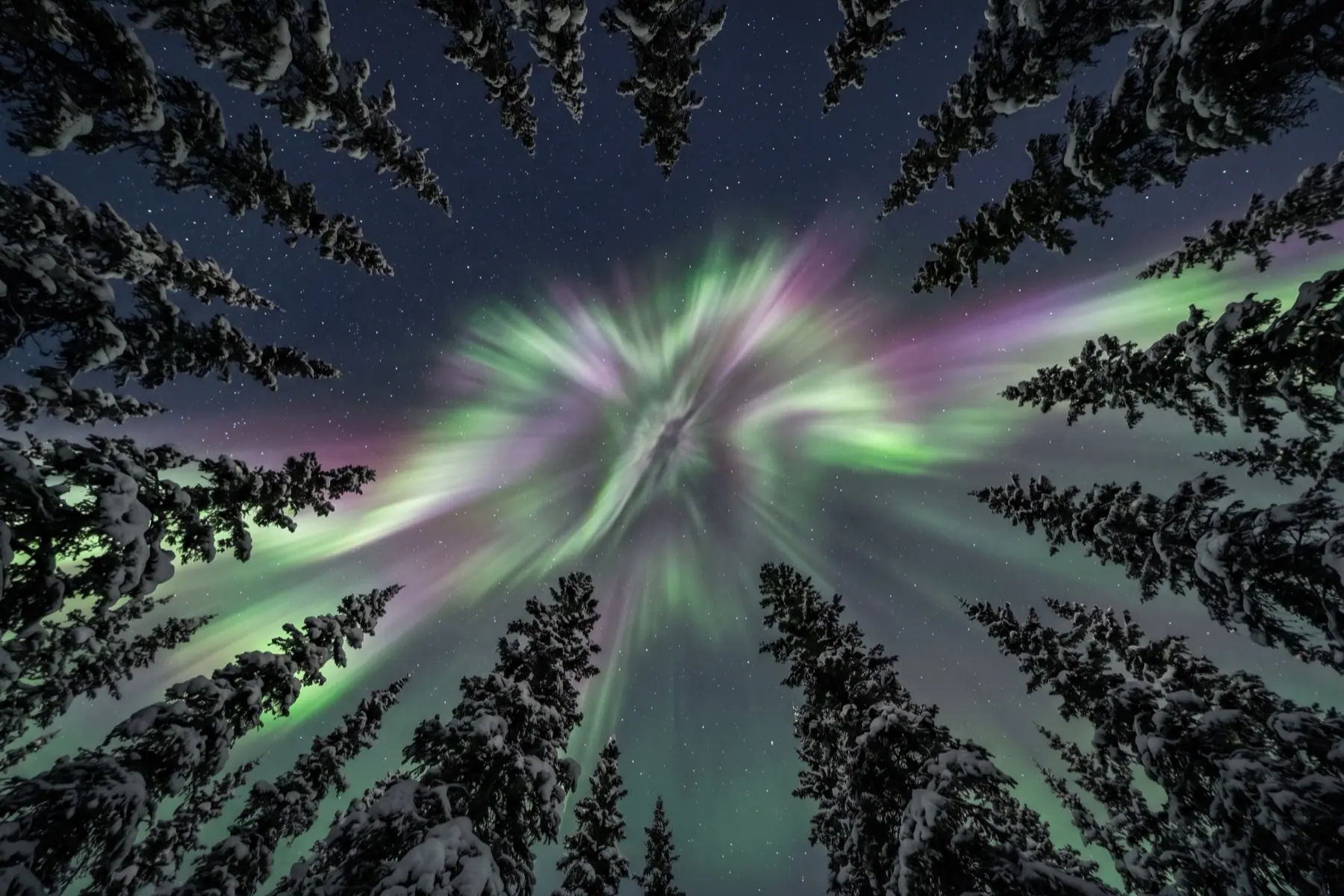
The substorm
If it comes, it comes fast: the arc brightens, folds, and breaks overhead into a corona. Lens straight up, 2 seconds, ISO 3200. Most guests shoot 300 frames in twenty minutes.
-
The frame
The one on the card. The lights calm into slow pulsing patches and the cold sets in. The best time for a portrait under the sky.
-
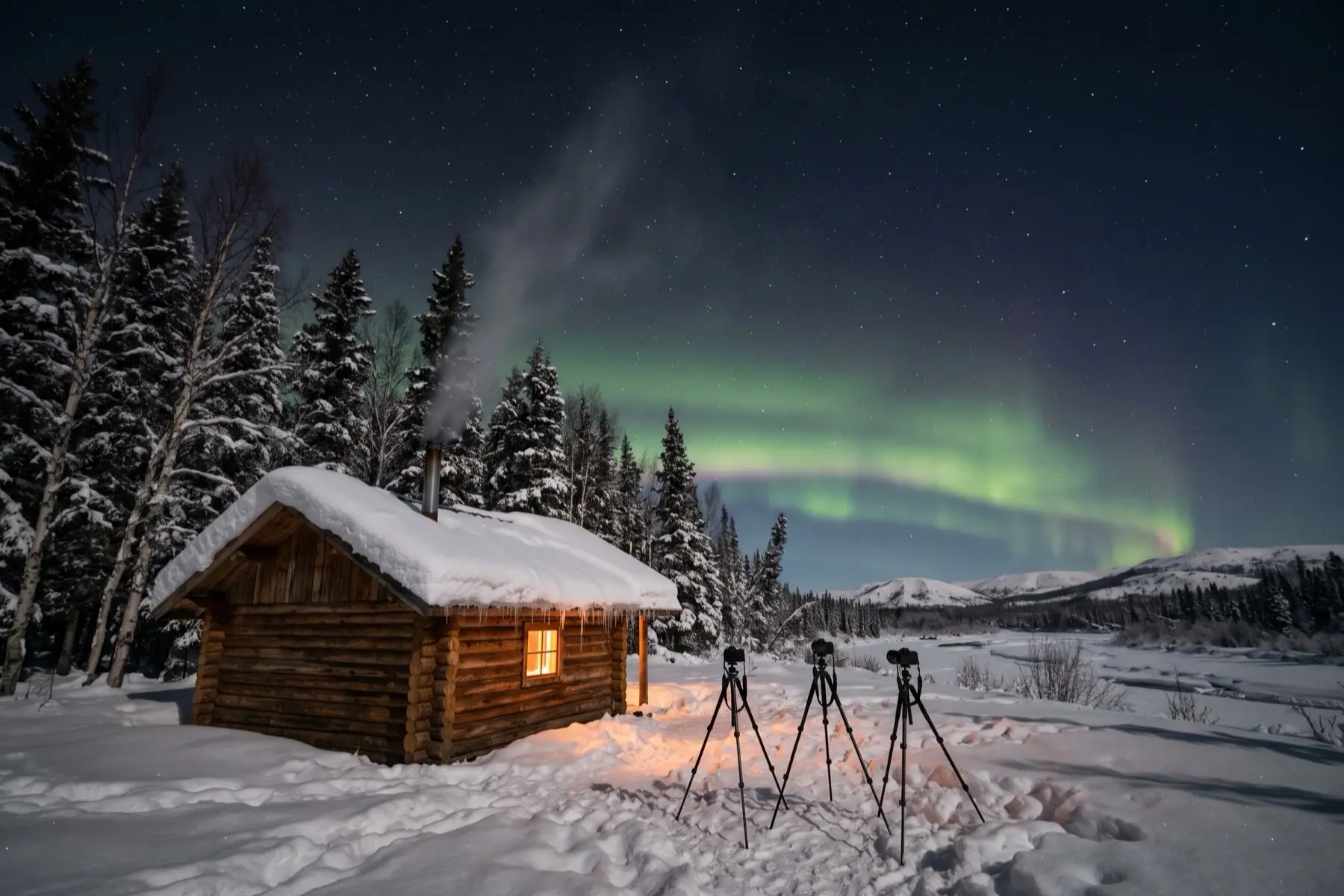
The warming cabin
A log cabin with a woodstove on a friend’s land. Cameras stay in sealed bags in the cold porch so they don’t fog; you thaw your hands and look at the backs of screens.
-
Home
Back at your hotel by 3:30 at the latest, with an emailed settings sheet and the Kp for tomorrow night.
Gallery
The portfolio
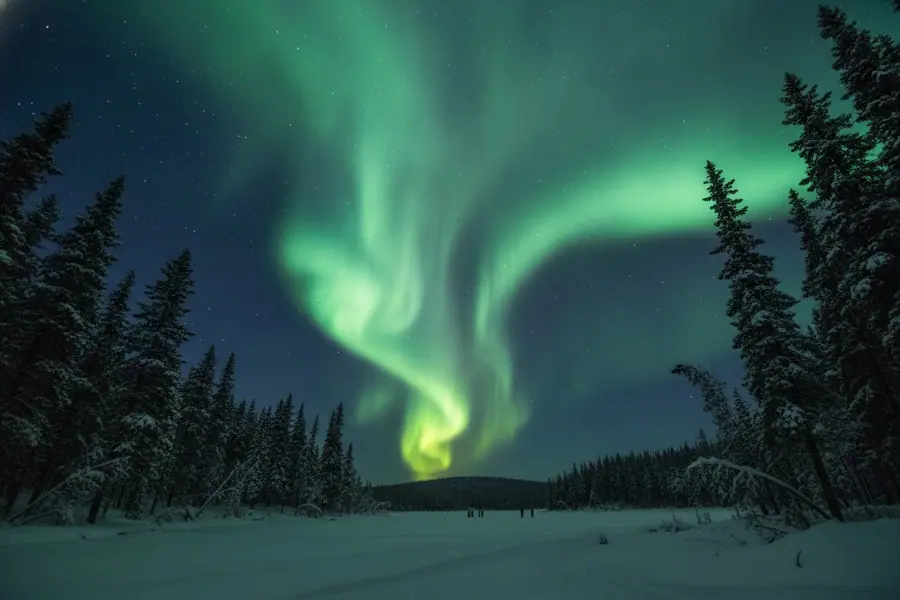
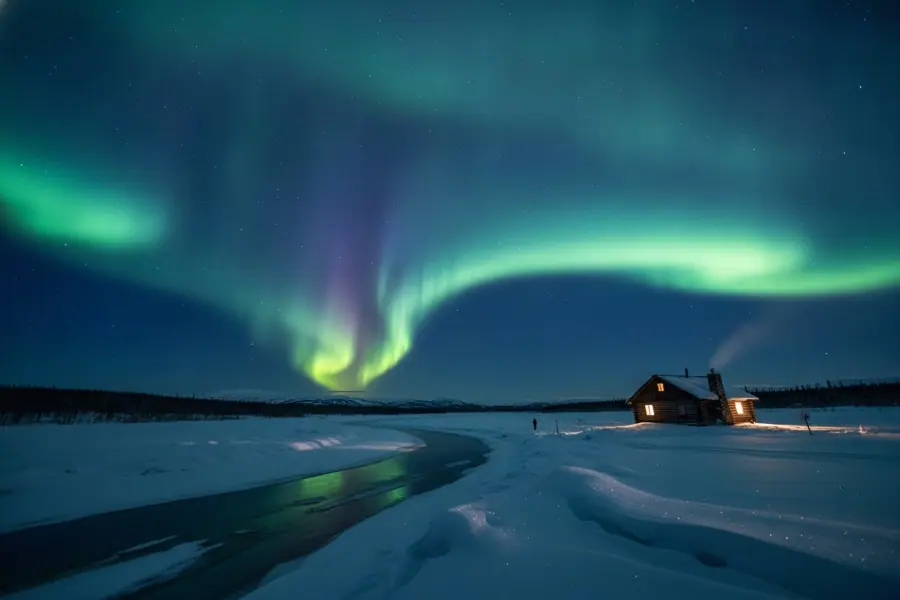
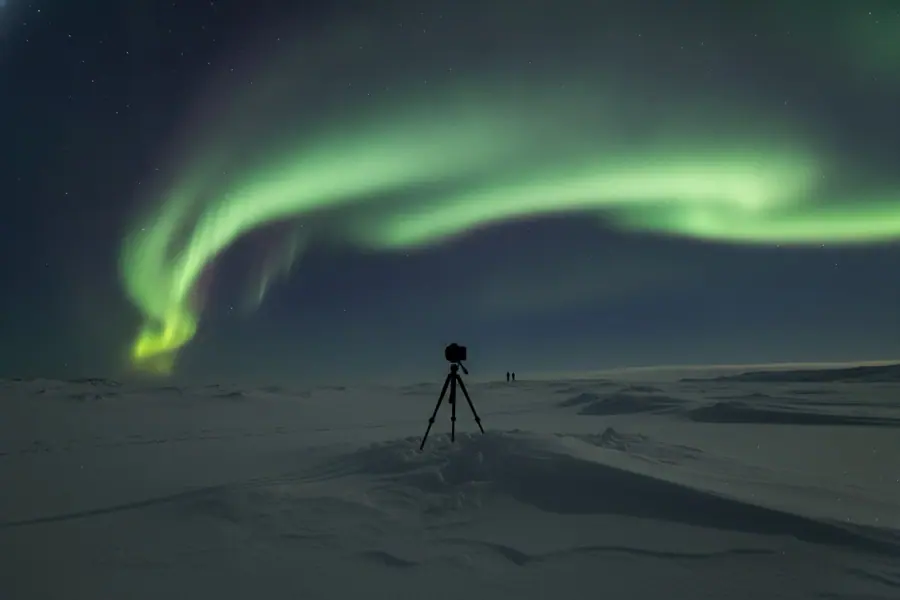
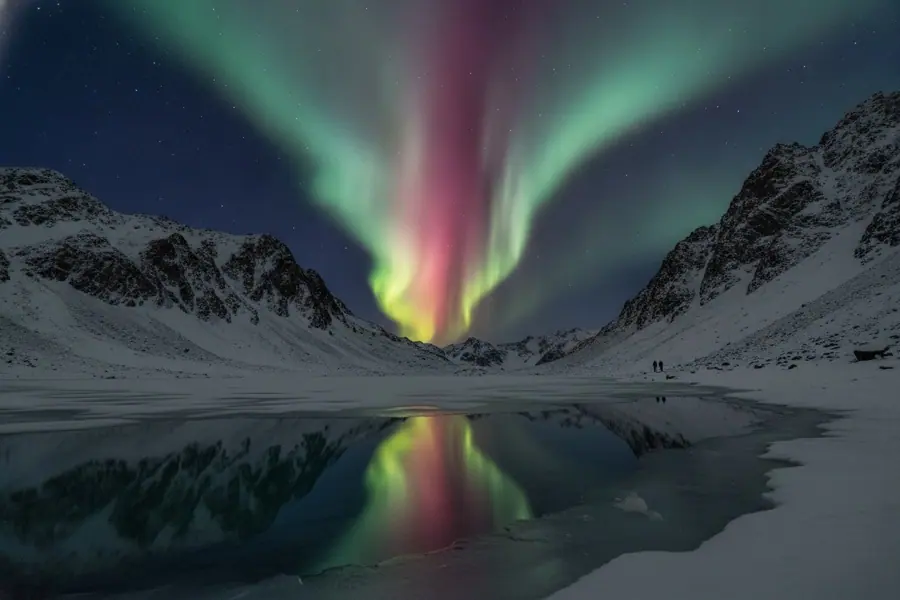
Kit’s frames and guests’, with where, when and how. All within an hour of Fairbanks except the pink edge.
-
The corona overheadCleary Summit · Feb 11, 12:46 amf/2 · 2s · ISO 3200 · 14mm
-
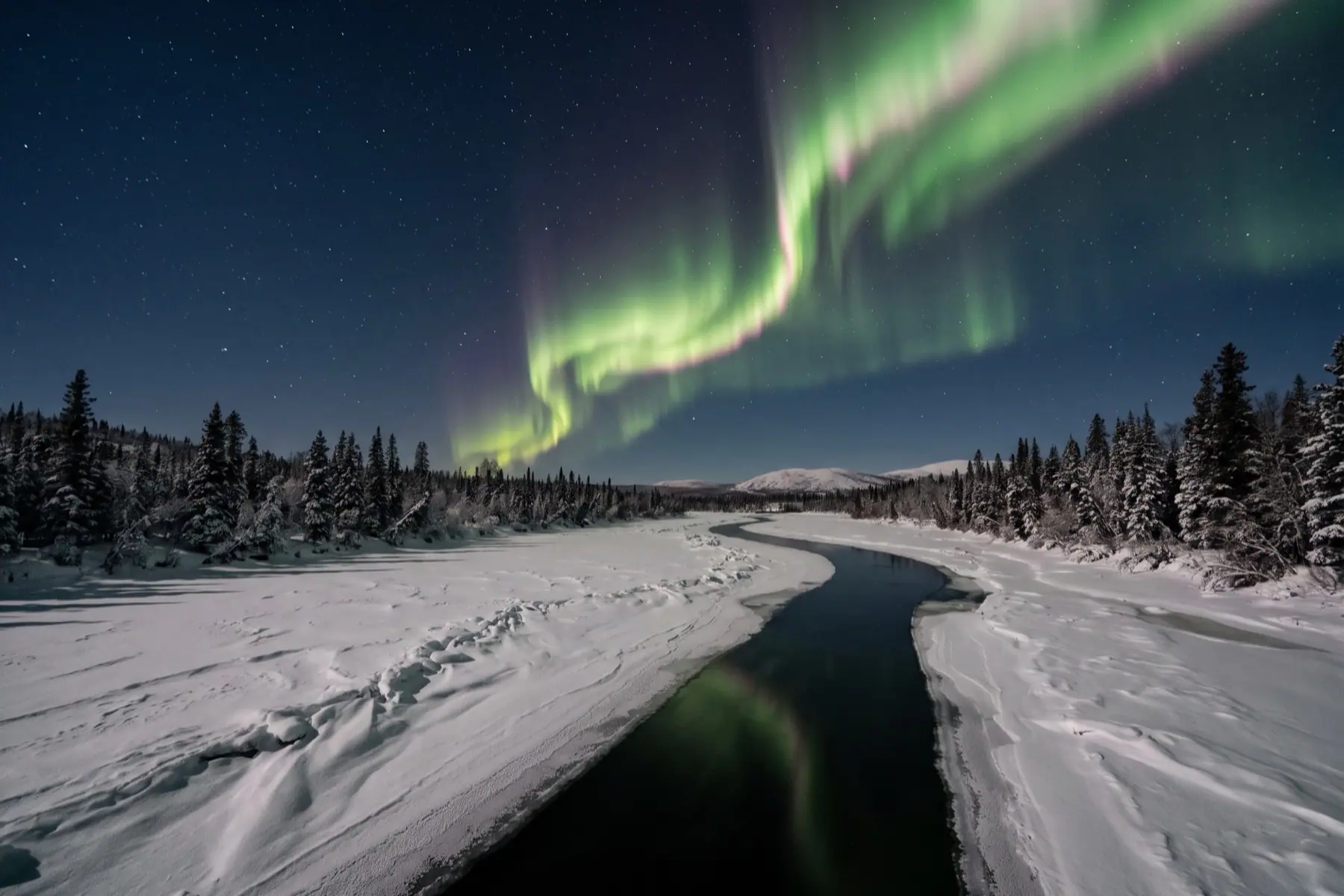
Open leadChena River · Mar 2, 11:58 pmf/2.8 · 5s · ISO 2500 · 16mm
-
The cabin on the riverChena valley · Jan 20, 1:30 amf/2 · 8s · ISO 1600 · 20mm
-
Four on the ridgeSteese Highway · Oct 3, 11:20 pmf/2.8 · 10s · ISO 2000 · 14mm
-
Pink edgeAlaska Range road trip · Mar 18, 12:10 amf/2 · 4s · ISO 3200 · 20mm
-
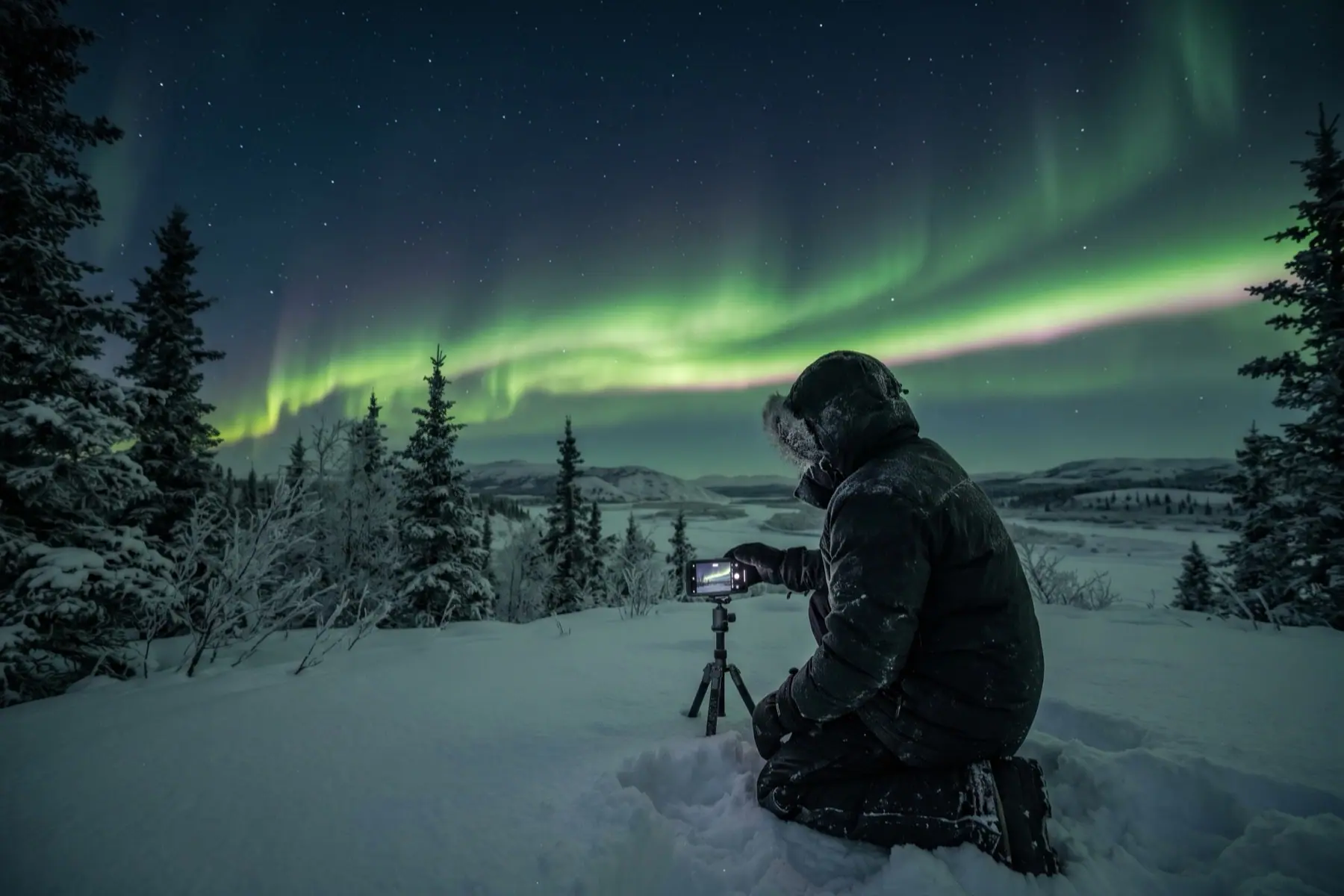
A phone on the snowGuest frame · Feb 4, 11:40 pmNight mode · 10s · phone tripod
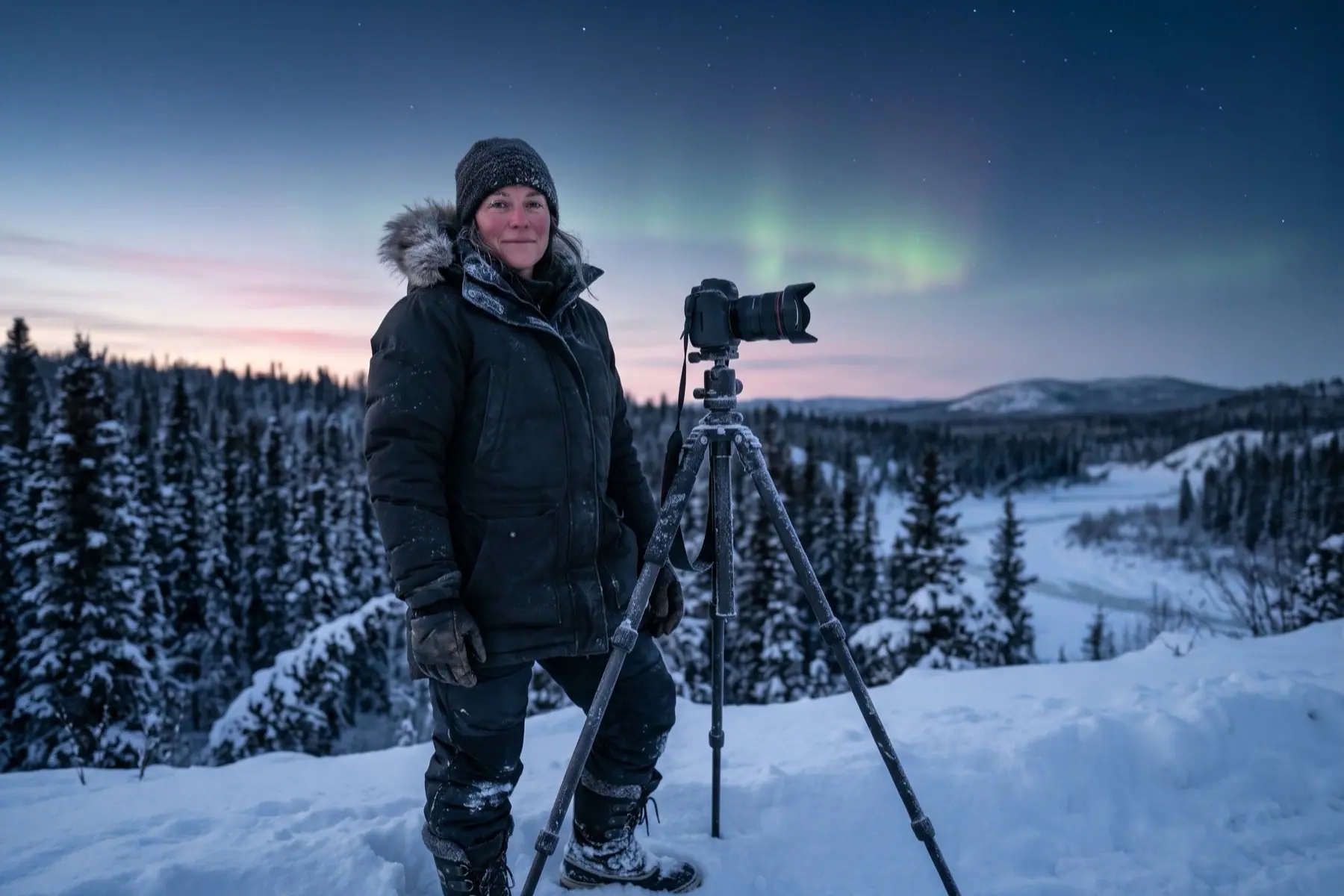
The guide
Kit Delaney
I came up from Spokane in the fall of 2008 to drive a fuel truck for one winter. The first night it hit −40 I was parked at a pullout on the Steese at 1 am, and the sky did something I still can’t describe.
I had a cheap camera in the glovebox. Every frame was soft and orange. I went back every clear night that winter, and by March I had one I liked: a corona over the cab of the truck, f/2.8, four seconds, a little shake from my teeth chattering.
Friends visiting from the lower 48 started asking me to take them. In 2015 I bought the van, and Polar Hour has run every season since. I still drive every night myself. Six people is how many I can help in the dark without anyone waiting, and how many fit in the van with their tripods.
- 18winters in Fairbanks
- 6photographers a night
- 2015first season, insured
Before you come
What to bring, and what we lend
- A camera with manual mode
- Any mirrorless or DSLR. A wide lens at f/2.8 or faster is ideal; f/4 works on bright nights.
- Or just your phone
- Recent phones are good at this. We lend small phone tripods and show you the night setting that works.
- A tripod
- Or borrow one of ours, free, with a remote release.
- Two spare batteries
- At −20°F a battery lasts about forty minutes. Keep the spares inside your jacket.
- Your own warm layers
- Thermal base layers, a fleece, a hat. We lend the parka, the boots and the mitts.
- A zip bag for the camera
- Seal it outside before you go in anywhere warm, so it doesn’t fog inside the lens.
Reviews
4.9 from 211 nights out
“We flew from Osaka for four nights and booked the pass before we landed. Night two the sky broke open over our heads.”
Haruka T.Three-night pass, February“I only had my phone. Kit set it up in two minutes and the frame on my lock screen is from 12:52 am.”
Dana R.Aurora night, March“I shoot weddings for a living and still learned something. She reads the magnetometer like a fishing guide reads water.”
Marco L.Private night, January“It was −31°F. I was warm. That’s the review.”
Pete W.Aurora night, February
Where
Fairbanks, under the auroral oval
Fairbanks sits right under the band where the lights are most often overhead. We pick you up at any hotel in town and drive to dark spots in the hills to the north: Cleary Summit, the Steese Highway pullouts, the Chena valley.
- Fly inFairbanks International (FAI), ten minutes from downtown.
- TimeAKST, UTC−9. Pickup 9:30 pm, home by 3:30 am.
- DarkSunset is about 5 pm in mid-February; full dark by about 7:30.




Questions
Before you fly up
Will we see the lights?
Nobody can promise it, and you should be wary of anyone who does. In February, on clear nights in the hills north of Fairbanks, Kit’s groups saw them on about four nights in five last season. That’s why the three-night pass exists.
What if it’s cloudy?
Kit decides at 5 pm on the day, from the cloud maps. If there is no clear sky within two hours’ drive, the night moves free to another open night or your deposit comes back. If we go out and the sky is clear but the lights stay quiet, your next night is half price.
How cold is it?
February nights are usually −10°F to −30°F, sometimes colder. The van stays warm and running, the cabin has a woodstove, and you’re never more than a few steps from either.
Do I need to be fit?
No. Every spot is a few steps from the van on packed snow. Ice cleats come with the boots.
What time zone are the times in?
Alaska Time: AKST, nine hours behind UTC, from November to mid-March. Pickup is 9:30 pm local wherever you booked from.
Can I book from abroad?
Yes, most guests do. Book the night before you fly, text Kit your hotel when you land, and she confirms by 5 pm that day.
How does the $50 deposit work?
It holds your seat and comes off the $185. The rest is paid on the night. Clouds move it free; anything else, you can move once up to three days before.
Book
Hold a seat in the van
Pick your night and how many of you are coming. $50 holds each seat. Kit texts you at 5 pm AKST on the day: on, or moved free.
$185 a night · three-night pass $495 · private night $720 for up to four
- 1Service
- 2Date
- 3Details
This is an example website made by Humfrid, so nothing was booked and no card was charged. On a real one, the deposit is paid right here and the date is yours. Get a website like this